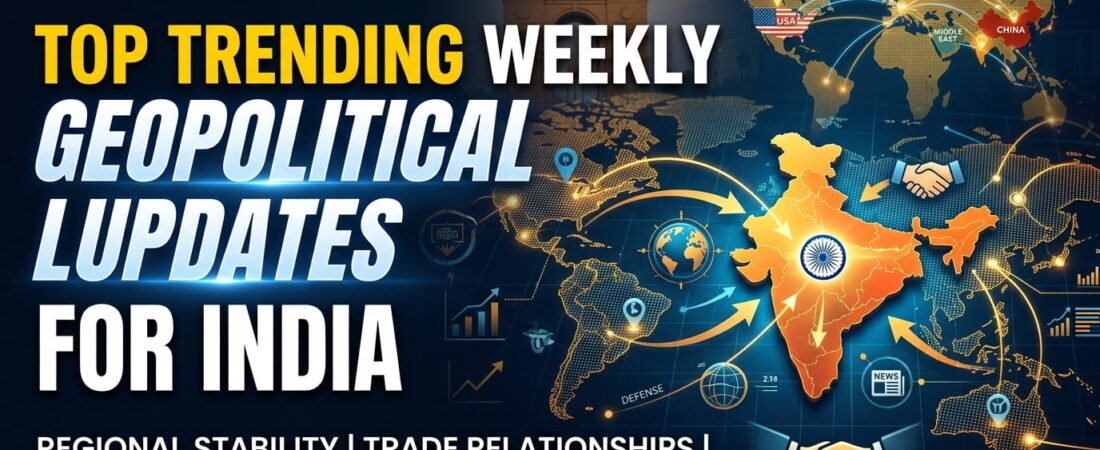


| # | News Title | Description | Hashtags |
|---|---|---|---|
| 1 | Modi embarks on landmark Central Asia tour: Tashkent state visit and SCO Bishkek summit | PM Modi undertook a four-day visit to Uzbekistan and the Kyrgyz Republic from August 29 to September 1 — his fourth visit to Uzbekistan and a pivotal multilateral engagement at the 26th SCO Summit in Bishkek. Central Asia is rapidly assuming strategic importance for India as the landlocked region’s connectivity, energy, and critical mineral reserves grow in relevance. Modi’s overarching message: security, connectivity, and opportunity — a region free from terrorism, separatism, and extremism. | #ModiCentralAsia #SCOSummit2026 #Bishkek #Tashkent #IndiaForeignPolicy |
| 2 | India-Uzbekistan elevated to Comprehensive Strategic Partnership; 16 landmark outcomes signed | PM Modi and Uzbek President Mirziyoyev signed 11 MoUs and announced 16 outcomes in Tashkent, elevating bilateral ties to a Comprehensive Strategic Partnership. The two countries set a $5 billion bilateral trade target by 2030, and India secured a long-term uranium supply arrangement from Uzbekistan — a critical addition to India’s nuclear energy security that also reduces dependence on any single supplier. Modi was conferred Uzbekistan’s highest state honour — the ‘Oliy Darajali Do’stlik’ Order. | #IndiaUzbekistan #StrategicPartnership #UraniumDeal #CriticalMinerals #UPI |
| 3 | Modi meets Putin at SCO sidelines; India-Russia $100 billion trade target and energy ties reviewed | PM Modi held bilateral talks with Russian President Vladimir Putin on the sidelines of the Bishkek SCO Summit, reviewing the full spectrum of India-Russia ties under their Special and Privileged Strategic Partnership. Energy cooperation — particularly India’s continued purchasing of Russian crude at preferential terms — and the $100 billion bilateral trade target were central to discussions. Modi invited Putin to attend the BRICS Summit in New Delhi. | #ModiPutinMeet #IndiaRussia #SCOBishkek #BRICSSummit #EnergySecurity |
| 4 | Modi meets Iranian President Pezeshkian at SCO; Chabahar, maritime security, and BRICS on table | PM Modi held a landmark bilateral meeting with Iranian President Masoud Pezeshkian on the sidelines of the SCO Summit on August 31 — a meeting of strategic weight at a time of US-Iran war. West Asia, maritime security, Chabahar Port’s future, and the Strait of Hormuz crisis were central to discussions. Modi invited Pezeshkian to New Delhi for the BRICS Summit, signalling India’s determination to keep diplomatic channels with Tehran open regardless of external pressure. | #ModiPezeshkian #IndiaIran #Chabahar #StraitOfHormuz #SCO2026 |
| 5 | Modi and Xi Jinping shake hands at SCO; both sides affirm “development partners, not rivals” | In a moment of diplomatic significance, PM Modi and Chinese President Xi Jinping interacted and shook hands at the 26th SCO Summit in Bishkek. Both sides affirmed that India and China are “development partners, not rivals” and that differences should not turn into disputes. They recognised the work of the Special Representatives — NSA Ajit Doval and Chinese FM Wang Yi — in their August 18 boundary talks, and expressed commitment to maintaining peace and tranquillity on the Line of Actual Control. | #ModiXiJinping #IndiaChinaRelations #SCOBishkek #LAC #BorderPeace |
| 6 | SCO Bishkek Summit marks 25 years of the organisation; India calls for region free of terrorism | The 26th SCO Summit in Bishkek — hosted by Kyrgyz President Sadyr Zhaparov — marks 25 years of the Shanghai Cooperation Organisation’s existence. In the plenary address, Modi outlined India’s vision for regional cooperation: an agenda centred on security, connectivity, and opportunity, with a firm message that terrorism, separatism, and extremism will not be tolerated, and that trans-border terror must be confronted collectively, not selectively. Pakistan is a co-participant and no bilateral was scheduled. | #SCO2026 #SCO25Years #BishkekSummit #CounterTerrorism #IndiaAtSCO |
| 7 | India-China Special Representatives meet in Delhi on August 18; LAC management in focus | NSA Ajit Doval and Chinese FM Wang Yi held the 24th round of Special Representative talks in New Delhi on August 18 — a significant meeting ahead of Modi’s SCO visit. Both sides discussed border management mechanisms, LAC patrolling protocols in Depsang and Demchok, and the broader framework for stabilising the bilateral relationship. The meeting directly enabled Modi and Xi’s Bishkek interaction and laid the ground for what India terms “normalisation with vigilance.” | #AjitDoval #WangYi #LACPatrol #IndiaChinaBorder #SpecialRepresentatives |
| 8 | India secures uranium from Uzbekistan and Canada simultaneously; nuclear energy gets fresh momentum | India’s nuclear energy ambitions received a major double boost this week — a long-term uranium supply arrangement with Uzbekistan formalised in Tashkent, adding to the earlier Canada-Cameco uranium deal signed in March 2026. These two supply corridors reduce India’s dependence on any single source of nuclear fuel and directly support PM Modi’s Red Fort announcement of 100 GW of nuclear power by 2047 and five new nuclear reactor units. | #NuclearIndia #UraniumSupply #IndiaUzbekistan #IndiaCanada #CleanEnergy |
| 9 | Bloomberg reports September will be India’s “month of summits”; G20, BRICS, UNGA all on the horizon | A Bloomberg India analysis published August 26 described September 2026 as India’s “month of summits,” noting that improved relations with China matter not just for peace along the border but for India’s broader positioning in an emerging multipolar world. BRICS in New Delhi, UNGA in New York, and potential bilateral meetings with key powers are all converging — making September India’s most diplomatically loaded month since the G20 presidency in 2023. | #IndiaInSeptember #BRICSSummit #UNGA2026 #G20India #IndianDiplomacy |
| 10 | Rajnath Singh and Yogi Adityanath inaugurate ₹100 crore Lucknow Cantonment development projects | Defence Minister Rajnath Singh and UP Chief Minister Yogi Adityanath performed the bhoomi pujan for 14 defence infrastructure projects worth over ₹100 crore at the Lucknow Cantonment on August 30. The projects reflect India’s commitment to modernising its military cantonment infrastructure, improving the quality of life for defence personnel and their families, and integrating cantonment areas more closely with the surrounding urban economy. | #LucknowCantonment #RajnathSingh #DefenceInfrastructure #YogiAdityanath #AtmanirbharBharat |
Summary & Insights from Team ReadNews.in
The week of August 26 to September 1, 2026 will be recorded as one of the most consequential weeks in India’s post-Independence diplomatic history — and it was entirely made in India’s own image.
PM Modi’s Central Asia journey was not a routine multilateral trip. It was a deliberate, sequenced act of statecraft. Starting in Tashkent — where a Comprehensive Strategic Partnership and a long-term uranium supply deal were signed — and moving to Bishkek — where bilateral meetings with Putin, Pezeshkian, Xi Jinping, and Zhaparov were all compressed into 48 hours — the visit demonstrated something that no press release can manufacture: that India is a country every major power is willing to come to the table with simultaneously.
The Uzbekistan outcomes deserve special attention. Sixteen deliverables, including UPI expansion into Central Asia, a critical minerals cooperation MoU, a uranium supply arrangement, and a $5 billion trade target by 2030 — all signed in a country that most Indians would struggle to locate on a map. This is how quiet, patient infrastructure diplomacy works. India has been investing in Central Asian ties for a decade. Tashkent 2026 is the dividend.
The Modi-Xi interaction at Bishkek — a handshake, a walk together, an affirmation that the two nations are “development partners, not rivals” — was politically careful but symbolically significant. The August 18 Doval-Wang Yi Special Representative meeting in New Delhi had cleared the diplomatic ground. What happened in Bishkek confirms that India and China have chosen managed stability over managed confrontation as their operating mode for now. The LAC remains calm. Both sides want it to stay that way.
The Modi-Pezeshkian bilateral was perhaps the bravest call of the week. Meeting the Iranian President openly and warmly — inviting him to BRICS in New Delhi — while the US-Iran war continues, is a statement of principle. India will not abandon its longstanding ties with Iran under external pressure. Chabahar’s future depends on this relationship staying alive diplomatically even when it is paused commercially.
September begins with India at the centre of the world’s diplomatic map. BRICS in New Delhi. UNGA. Potentially the conclusion of the Canada CEPA. A House vote on the Graham sanctions bill in Washington. Every one of these events has India at its core.
This is what strategic autonomy looks like when it is working.
— Research & Editorial Desk, ReadNews.in