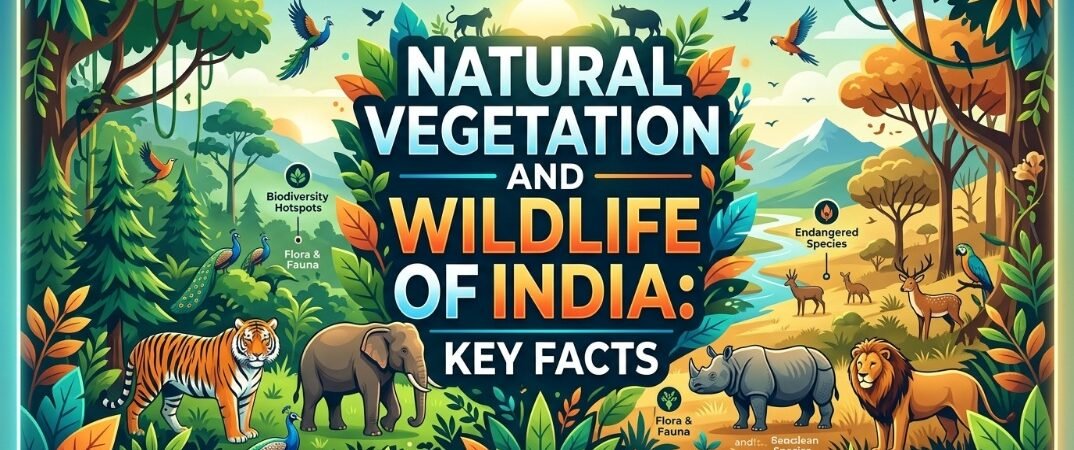


Introduction to India’s Natural Vegetation
India is renowned for its remarkable biodiversity, which is largely attributed to its diverse geographical features and climatic conditions. The country exhibits a multitude of natural vegetation types, ranging from lush forests and vast grasslands to arid deserts. Each of these ecosystems is influenced by specific climate patterns, soil types, and elevation levels, contributing to a rich tapestry of flora and fauna.
The tropical rainforests are predominantly found in the Western Ghats, northeastern states, and parts of the Andaman Islands. Characterized by high humidity and ample rainfall, these forests are home to a wide variety of species, including teak, rosewood, and mahogany. In contrast, the deciduous forests, which shed their leaves annually, flourish in central and northern India. They exhibit seasonal changes and support various wildlife such as deer, elephants, and numerous bird species.
Grasslands are another significant component of India’s natural vegetation. These areas, often referred to as savannas, are found in regions such as the Terai and the Deccan Plateau. They are characterized by a mix of grasses and occasional shrubs, providing an important habitat for species like antelopes and several migratory birds. Furthermore, India is also home to desert vegetation primarily found in the Thar Desert. Here, hardy plants such as cacti, acacia, and xerophytic shrubs are adapted to withstand extreme temperatures and scarce rainfall.
Overall, the interaction between geographical features and climate plays a pivotal role in shaping India’s natural vegetation. As the climate varies from tropical to temperate across different regions, so does the vegetation, contributing considerably to the country’s ecological diversity and the variety of wildlife it supports.
Forest Types in India
India’s diverse climate and topography have resulted in a rich variety of forest types, each supporting unique ecosystems and wildlife. The three primary forest types in India are tropical rainforests, deciduous forests, and coniferous forests. Each of these forest types plays a significant role in maintaining ecological balance and supports a wide range of flora and fauna.
Tropical rainforests, found mainly in the Western Ghats, Northeast India, and the Andaman and Nicobar Islands, are characterized by high rainfall and rich biodiversity. These forests host an array of plant species, including towering trees, ferns, and a wealth of epiphytes. The wildlife in these forests is equally impressive, including various primate species, elephants, and diverse bird species such as hornbills and parakeets. The preservation of tropical rainforests is crucial, as they are critical for regulating the global climate and providing habitat for countless organisms.
Deciduous forests, which include both tropical and temperate varieties, are primarily located in the central and eastern parts of India. These forests are distinguished by their seasonal leaf shedding; during dry seasons, trees such as teak and sal lose their foliage to conserve water. In these regions, one can find a mix of wildlife, including deer, leopards, and numerous insect species. Deciduous forests serve significant ecological functions, such as enhancing soil fertility and supporting the water cycle.
Lastly, coniferous forests, predominantly located in the northern regions of India, consist mainly of pines, firs, and cedars. These forests thrive at higher altitudes and are adapted to cooler temperatures. They provide habitat to various animals, including snow leopards, red foxes, and numerous species of birds. The coniferous forests play a vital role in protecting the region’s ecosystem and act as a watershed for many rivers.
Grasslands and Savannas
The expansive grasslands and savannas of India play a vital role in the ecological landscape of the country. These areas, characterized by open spaces dominated by grasses rather than large tree formations, provide essential habitats for a diverse array of wildlife. The two main types of grasslands found in India are the temperate grasslands situated in the northern regions and the tropical grasslands, primarily found in the central and southern parts.
Common grass species include Imperata cylindrica, Andropogon species, and Chrysopogon species. These grasses not only provide food for herbivores but also help in maintaining the soil structure and preventing erosion. The ecological importance of grasslands cannot be overstated, as they contribute significantly to carbon storage, thus playing a crucial role in mitigating climate change.
Moreover, these grassland habitats support numerous species of animals, including large herbivores such as deer, antelope, and elephants, as well as carnivores like tigers and leopards that rely on these grazing animals for sustenance. Additionally, various bird species, reptiles, and insects thrive in these environments, which are primarily influenced by climatic conditions, soil types, and fire dynamics.
Grasslands also act as a biological corridor, facilitating the movement of wildlife between different ecosystems and thereby enhancing genetic diversity. The preservation and restoration of these areas are critical in sustaining biodiversity in India, as they nurture intricate ecological relationships within the environment.
Deserts and Arid Zones
India is home to several distinctive desert regions, among which the Thar Desert stands out as the most prominent. Spanning across the northwestern states of Rajasthan, Gujarat, Punjab, and Haryana, the Thar Desert is often referred to as the “Great Indian Desert.” Covering an area of approximately 200,000 square kilometers, it is characterized by undulating sand dunes, sparse vegetation, and extreme temperature fluctuations. In such arid conditions, plants and animals have developed remarkable adaptations to thrive amidst these challenges.
Flora within the Thar Desert mainly comprises drought-resistant species. Plants, such as xerophytes, have evolved mechanisms to conserve water, such as thick cuticles and deep root systems. Examples include the khejri tree (Prosopis cineraria), which not only withstands long dry spells but also supports local biodiversity, providing shade and food for various species. Other resilient plant species include desert cacti and thorny bushes, which flourish despite limited moisture availability.
On the animal front, diverse wildlife inhabits the Thar Desert, showcasing exceptional adaptations. Species such as the desert fox, chinkara (Indian gazelle), and sand grouse are well-suited for life in arid zones. They have evolved physiological and behavioral traits that allow them to minimize water loss and seek shelter during hot parts of the day. For example, many animals exhibit nocturnal behavior, allowing them to thrive in cooler temperatures and reducing their exposure to harsh sun.
Despite their resilience, the ecosystems in arid zones like the Thar Desert face numerous challenges, notably arising from climate change and human activities. Frequent droughts, rising temperatures, and habitat degradation due to urban expansion and agriculture pose significant threats. These factors not only impact the survival of diverse species but also disrupt the delicate balance within these ecosystems, underlining the importance of conservation efforts in protecting India’s unique desert environments.
Wetlands and Aquatic Ecosystems
Wetlands represent a significant and dynamic component of India’s ecological landscape, encompassing diverse ecosystems such as marshes, swamps, and coastal areas. These aquatic habitats are characterized by the presence of water, either permanently or seasonally, influencing the type of vegetation and wildlife that thrive within them. They play a crucial role in supporting biodiversity, serving as breeding grounds for aquatic species and migratory birds, which depend on these environments for nourishment, shelter, and nesting sites.
Marshes and swamps, commonly found across India’s varied terrain, provide essential ecosystem services including water filtration, flood regulation, and carbon sequestration. The richness of wildlife in these areas is paramount, with numerous species, including amphibians, reptiles, mammals, and a myriad of fish, depending on wetlands for their life cycles. Furthermore, these ecosystems are vital for migratory birds, acting as stopover points on their arduous journeys across seasons, offering food and refuge.
Coastal wetlands, such as mangroves and salt marshes, possess unique features that further enhance the biodiversity of aquatic ecosystems. Mangroves, for instance, are not only critical in stabilizing shorelines but also provide nursery grounds for many marine species. The intricate interdependence between these habitats and their inhabitants highlights the importance of conserving wetlands to maintain ecological balance.
Recognizing the invaluable role of wetlands, various conservation efforts have been undertaken to protect these habitats from degradation and pollution. Initiatives include designating protected areas, implementing sustainable management practices, and fostering community engagement to promote awareness about the significance of wetlands. Collaborative efforts among government bodies, NGOs, and local communities are essential for ensuring the protection of these vital ecosystems for future generations.
Biodiversity Hotspots in India
India is home to several biodiversity hotspots, regions recognized for their extraordinary levels of endemic species and significant ecological richness. The concept of biodiversity hotspots was first introduced by Norman Myers in 1988, and it highlights areas that contain a high number of plant and animal species, many of which are not found anywhere else in the world. Currently, India encompasses four recognized biodiversity hotspots: the Himalaya, the Indo-Burma region, the Western Ghats and Sri Lanka, and Sundaland, which includes the Nicobar Islands.
The Himalaya hotspot is characterized by its dramatic landscapes and high altitude ecology, housing several endemic species such as the Himalayan blue sheep and snow leopard. Conservation efforts here face challenges such as climate change, habitat loss, and overgrazing, impacting both the flora and fauna.
In the Indo-Burma region, one of the richest areas for biodiversity, endemic species include the Indian elephant and the Yangtze giant softshell turtle. This region is threatened by deforestation, agricultural expansion, and poaching, necessitating urgent conservation strategies to protect its unique wildlife.
The Western Ghats and Sri Lanka hotspot is renowned for its dense rainforests and diverse wildlife, which includes the Nilgiri tahr and the lion-tailed macaque. However, the region is under intense pressure from urbanization, invasive species, and climate shifts, making conservation critical for survival.
Lastly, the Sundaland hotspot, primarily located in the Nicobar Islands, faces rising sea levels and habitat fragmentation, threatening species like the Nicobar pigeon. Protecting these ecosystems is vital not only for the species that reside within them but also for maintaining global biodiversity.
Iconic Wildlife Species of India
India is known for its rich biodiversity and a variety of wildlife species that are iconic not only to the country but also to the world. Among the most revered species is the Bengal tiger (Panthera tigris tigris), which is the national animal of India. Found primarily in dense forests, grasslands, and mangroves, the Bengal tiger plays a crucial role in maintaining the ecological balance of its habitat. Currently, the Bengal tiger is classified as endangered due to habitat loss and poaching, with conservation efforts underway to protect its dwindling population.
Another remarkable species is the Indian elephant (Elephas maximus indicus), which serves as a symbol of strength and wisdom. These majestic creatures inhabit a range of environments, from grasslands and forests to wetlands. The Indian elephant is also categorized as endangered, primarily due to habitat encroachment and conflict with agricultural expansion. Conservation strategies for this species include habitat protection and community engagement to minimize human-elephant conflict.
Additionally, the one-horned rhinoceros (Rhinoceros unicornis) is a unique species found primarily in the grasslands of Assam and West Bengal. Distinguished by its single horn, this rhino represents a significant conservation success story, having rebounded from the brink of extinction thanks to legal protections and dedicated park management. Although the species is still considered vulnerable, ongoing efforts in habitat conservation and anti-poaching measures are crucial in ensuring its survival.
These iconic wildlife species, among others, not only enrich India’s natural heritage but also highlight the importance of conservation initiatives that aim to protect their habitats and ensure their survival for generations to come.
Threats to Natural Vegetation and Wildlife
India’s rich natural vegetation and diverse wildlife face numerous threats, jeopardizing the health of its ecosystems. Deforestation is perhaps the most pressing challenge, driven by agricultural expansion, urbanization, and industrial development. The rapid loss of forests not only diminishes habitat for countless species but also contributes to soil erosion and carbon release, exacerbating climate change.
Another significant threat is habitat fragmentation. As roadways and settlements encroach on wild areas, the remaining habitats become isolated. This fragmentation limits the movement of species, disrupts breeding patterns, and reduces genetic diversity, ultimately threatening the survival of several species. Small, isolated populations are more susceptible to extinction due to inbreeding and reduced resilience to environmental changes.
Climate change poses a further risk, impacting rainfall patterns, temperature ranges, and seasonal variations critical for flora and fauna. Shifts in climate can lead to the misalignment of species’ life cycles, causing food shortages and creating unstainable habitats. For instance, altered monsoon patterns affect the growth of essential plants, destabilizing the ecosystems that rely on these species.
Furthermore, human-wildlife conflict has emerged as a formidable challenge. As human populations expand into wildlife territories, encounters between humans and animals have increased, leading to retaliatory killings and loss of wildlife. Livestock predation and crop raiding by wildlife often exacerbate tensions, leading communities to take drastic actions to protect their livelihoods.
Collectively, these threats significantly undermine India’s biodiversity. The intricate balance of its ecosystems is delicate, and the loss of natural vegetation and wildlife can lead to cascading effects on the environment, emphasizing the urgent need for sustainable land management and conservation strategies.
Conservation Efforts and Future Directions
India, a country endowed with rich biodiversity, has implemented various conservation initiatives aimed at safeguarding its natural vegetation and wildlife. The government, alongside numerous non-governmental organizations (NGOs) and local communities, has made significant strides in conserving endangered species, restoring ecosystems, and limiting the impact of human activities on wildlife habitats.
One prominent success story in conservation is the Project Tiger initiative launched in 1973. This program has significantly increased the tiger population through habitat restoration and stringent anti-poaching measures. Similarly, Project Elephant, initiated in 1992, has focused on promoting the conservation of elephants and their natural habitats, thus ensuring the survival of this iconic species. These projects have not only contributed to the protection of specific animal species but have also promoted the overall health of ecosystems, which are essential to maintaining biodiversity.
Ongoing projects extend beyond flagship species. The National Biodiversity Action Plan has fostered community involvement and awareness, encouraging local populations to engage in conservation efforts. Grassroots organizations have played a crucial role in promoting sustainable land-use practices that prevent habitat destruction while supporting local livelihoods. Furthermore, initiatives for afforestation, such as the Green India Mission, aim to restore degraded lands while combating climate change, ensuring the preservation of the rich flora that supports various fauna.
Looking to the future, India must continue to focus on sustainable practices that balance development with conservation efforts. Strengthening legal frameworks, enhancing community outreach programs, and utilizing technology for real-time monitoring of wildlife are vital steps that can foster holistic conservation strategies. The involvement of local communities remains paramount; they are often the first line of defense when it comes to protecting natural resources. By promoting ecological awareness and providing adequate support, India can ensure that its diverse natural heritage is preserved for future generations.