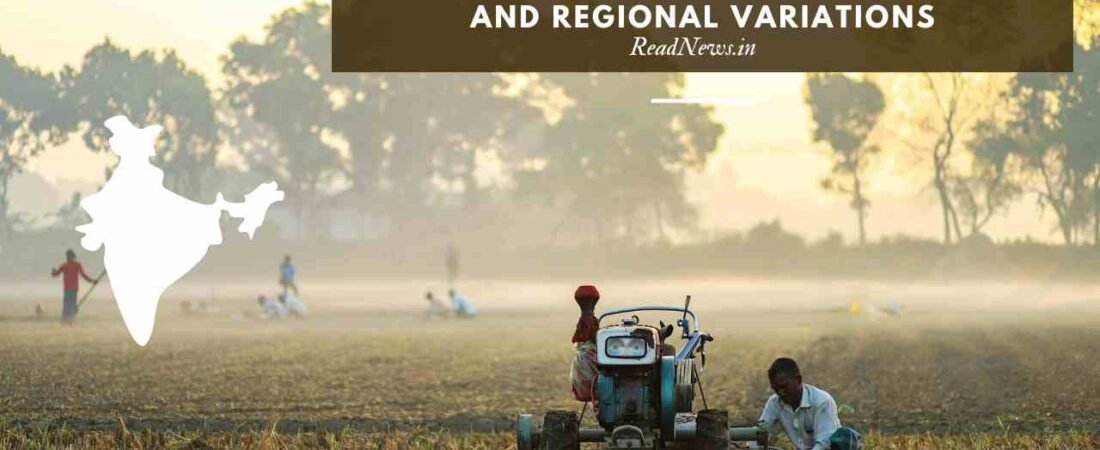


Introduction to Indian Agriculture
Indian agriculture has been a foundational aspect of its economy and societal structure for millennia. As one of the largest sectors in India, agriculture plays a crucial role in sustaining the livelihoods of approximately 58% of the population, reflecting its significance beyond merely economic contributions. The historical evolution of agriculture in India showcases a transition from traditional practices to the adoption of modern farming techniques, driven by advancements in technology and a growing demand for food security.
The development of agriculture in India has been shaped by various factors such as geography, climate, and cultural practices. The diverse agro-climatic zones across the country allow for the cultivation of a wide range of crops, from rice and wheat in the northern plains to spices and tropical fruits in the southern regions. This geographic diversity not only sustains local economies but also contributes to India’s reputation as a key player in global agricultural markets.
Factors that influence agricultural practices in India include soil fertility, water availability, and climatic conditions, which vary significantly from one region to another. The monsoon season, for instance, plays a critical role in determining crop yields, while irrigation facilities have been vital in supporting agriculture, particularly in arid regions. Additionally, socio-economic factors such as access to technology, land ownership patterns, and government policies also impact agricultural productivity and farmers’ incomes.
Thus, the intricate interplay of historical, geographical, and socio-economic factors has defined the landscape of Indian agriculture. Understanding these elements is essential for assessing the current state of agriculture in India and its future trajectory as the country navigates challenges related to food security, sustainability, and economic growth.
Geographical Diversity in India
India, known for its vast and varied landscape, showcases a remarkable diversity in geographical features that significantly influence agricultural practices. This diversity encompasses an array of climatic conditions, topographical variations, and soil types across its numerous states, leading to distinct cropping patterns tailored to local environments.
The climate in India varies from tropical in the south to temperate in the north, creating an array of growing conditions. For instance, the Himalayan region experiences cold weather, which supports the cultivation of crops such as barley and mustard, while the southern states, with their tropical climate, are ideal for rice and various spices. Furthermore, the monsoon season, which lasts from June to September, plays a crucial role in determining the agricultural calendar across the nation. Regions with heavier rainfall often see the predominance of kharif crops, which require substantial moisture, while rabi crops, sown during the cooler months, flourish in drier areas.
Topographically, India features plains, plateaus, deserts, and hills, each contributing to the diversity of agriculture. The Indo-Gangetic Plains foster extensive cereal production, driven by fertile alluvial soil. Conversely, the rugged hilly regions may support terrace farming, essential for cultivating crops like tea and coffee. Additionally, the arid deserts of Rajasthan dictate the use of drought-resistant crops, primarily millet and barley, adapting agriculture to extreme conditions.
Soil types, another critical element of agricultural geography, vary widely across India. The black soil of Maharashtra, rich in iron and magnesium, is excellent for cotton cultivation, whereas the red soil in the southern regions is more suited to crops like sorghum and groundnuts. Understanding these geographical intricacies is vital for optimizing agricultural outputs and ensuring food security in India.
Major Cropping Patterns in India
India’s agricultural landscape is characterized by a diverse range of cropping patterns that are intricately linked to the country’s varied climatic conditions, soil types, and regional agricultural practices. The primary cropping patterns in India can be classified into Kharif, Rabi, and Zaid crops, each associated with distinct seasons and cultivation practices.
The Kharif crop, also known as the monsoon crop, is typically sown during the southwest monsoon season, which lasts from June to September. Major Kharif crops include rice, maize, cotton, and soybeans. These crops thrive in the warm and humid conditions prevalent during this period. The dependence on rainfall for water supply means that farmers often tailor their practices, using traditional knowledge and methods to maximize yields. Kharif crops play a significant role in the livelihood of millions of farmers and contribute significantly to India’s overall agricultural output.
In contrast, the Rabi crop is planted in the winter months, generally from October to December, and harvested in the spring. The Rabi season benefits from the cooler temperatures and the availability of irrigation from rivers and reservoirs. Key Rabi crops encompass wheat, barley, and mustard. The focus on these crops during this season relates to the lower humidity and soil moisture levels, allowing for better yield quality and quantity. Farmers engage in various agronomic practices, such as crop rotation and intercropping, to optimize production.
The Zaid crop is a short duration crop grown between the Rabi and Kharif seasons, typically from March to June. Zaid crops, including cucumbers, melons, and vegetables, have garnered importance in India due to their ability to maximize production in the interstice seasons. The flexibility and adaptability of these cropping patterns reflect the resilience of Indian agriculture and serve as a testament to farmers’ strategies in responding to climatic variations.
Regional Variations in Cropping Practices
India’s diverse geography significantly influences its agricultural production, leading to distinct cropping practices across various regions. The Northern plains, characterized by fertile alluvial soils and ample water resources, primarily support the cultivation of rice, wheat, and sugarcane. The farmers in states like Punjab and Haryana benefit from a well-established irrigation system, allowing them to achieve high yields in these staple crops.
In contrast, the Southern peninsula of India presents a different agricultural scenario. The climate here, combined with topography variations, supports the cultivation of crops like rice, cotton, and various oilseeds. Regions such as Tamil Nadu and Andhra Pradesh focus heavily on rice production due to the region’s monsoon patterns. The cultivation of spices such as pepper and cardamom thrives in the Western Ghats, showcasing the diversity of crops in this part of the country.
Meanwhile, Western Rajasthan, known for its arid conditions, results in distinctly different cropping practices. The predominant crops in this region are millet and pulses, which are better suited to withstand drought conditions. Farmers here often rely on traditional methods of rainwater harvesting to maximize water use, adapting their practices to the harsh climate.
The Eastern states, particularly West Bengal and Odisha, enjoy favorable climatic conditions that support the growth of rice and jute. The alluvial soils and the availability of rivers ensure a steady supply of water, facilitating the cultivation of these water-intensive crops. Additionally, the region’s farming practices are deeply influenced by cultural factors, with festivals often tied to planting and harvesting periods.
Factors such as soil type, climate, water availability, and traditional practices significantly contribute to the regional variations in cropping in India. Understanding these differences is essential for formulating targeted agricultural policies and improving food security across the nation.
Climate Impact on Cropping Patterns
Climate plays a pivotal role in determining the cropping patterns and agricultural productivity across different regions of India. Aspects such as temperature variations, rainfall distribution, and seasonal weather patterns significantly influence which crops are cultivated at any given time. Over recent years, climate change has exacerbated these factors, influencing farmers’ decisions and overall agricultural output.
The Indian subcontinent experiences diverse climatic conditions ranging from the arid deserts of Rajasthan to the tropical forests of Kerala. Monsoons are particularly influential, as they dictate the sowing and harvesting cycles for many crops. The onset and duration of monsoon rains directly affect water availability, which is critical in ensuring optimal crop yields. For instance, a delayed or insufficient monsoon can lead to drought conditions, severely impacting crops like paddy and pulses that depend on consistent rainfall.
Conversely, excessive rainfall can lead to waterlogging, rendering fields unfit for cultivation and promoting conditions conducive to pest outbreaks and crop diseases. These climatic extremes necessitate adaptive strategies from farmers to mitigate risks associated with crop failure. Consequently, agronomic practices must evolve, incorporating climate-resilient crop varieties and innovative irrigation methods.
Rising temperatures, another facet of climate change, can also influence cropping decisions. Higher heat levels stress plants and may lead to reduced yields for temperature-sensitive crops, such as wheat and maize. This situation compels farmers to consider alternative crops that are more resilient to heat stress, thereby changing traditional cropping patterns.
Overall, the impact of climate on cropping patterns in India is multifaceted, influencing regional agricultural practices and crop selection. As climate-related challenges continue to unfold, understanding and adapting to these shifts becomes crucial for ensuring food security and sustaining the livelihoods of farmers across the nation.
Technological Advances in Agriculture
In recent years, the landscape of agriculture in India has undergone significant transformations due to the integration of modern technologies. These technological advances are not only reshaping traditional cropping patterns but also enhancing agricultural productivity across the country. Among the most notable innovations is the introduction of genetically modified (GM) crops, which are engineered to exhibit desirable traits such as pest resistance, drought tolerance, and improved nutritional content. The adoption of GM crops has been particularly beneficial in regions prone to pest infestations or adverse climatic conditions, thereby ensuring food security and sustainability.
Precision farming is another vital technological advancement that is making waves in Indian agriculture. This technique employs data analytics, GPS technology, and drone surveillance to monitor crop health and optimize resource usage. By analyzing soil conditions, moisture levels, and crop yields in real-time, farmers can make informed decisions that lead to efficient use of fertilizers, water, and pesticides. This approach not only increases productivity but also minimizes environmental impact, promoting sustainable farming practices.
Furthermore, advanced irrigation techniques are reshaping water management in agriculture. With water scarcity becoming a pressing issue, innovations such as drip and sprinkler irrigation systems are gaining popularity. These methods facilitate precise water application directly at the plant’s roots, thus significantly reducing water wastage and ensuring optimal growth conditions. The shift from traditional flood irrigation to modern systems allows farmers to cultivate crops in arid and semi-arid regions, expanding the potential areas for agriculture.
Collectively, these technological advances in agriculture are setting new standards for productivity and sustainability in Indian cropping systems. By incorporating these innovations, farmers are better equipped to face the challenges posed by climate change, market dynamics, and resource limitations, ultimately leading to enhanced food production and economic stability in rural areas.
Government Policies and Support for Farmers
In India, the agricultural sector plays a critical role in the nation’s economy, and government initiatives are pivotal in enhancing the well-being of farmers. Recognizing the challenges faced by agricultural workers, the Indian government has developed various policies and support systems aimed at ensuring their livelihoods and improving agricultural productivity.
One of the cornerstone initiatives is the subsidy scheme for fertilizers, seeds, and irrigation systems, which directly benefits farmers by reducing input costs. By making resources more affordable, these subsidies encourage farmers to adopt higher-yielding varieties and more sustainable practices, significantly affecting their output levels. Another crucial policy is the Pradhan Mantri Fasal Bima Yojana (PMFBY), a comprehensive crop insurance scheme designed to protect farmers against natural calamities and crop failures. This initiative aims to reduce the financial burden on farmers and promote risk management in agriculture.
Additionally, the government implements welfare programs such as the Direct Benefit Transfer (DBT) scheme, which ensures timely financial assistance to farmers, thereby facilitating access to essential resources and reducing their dependency on informal credit channels. The agricultural credit scheme provides easy access to loans for farmers, which enables them to invest in modern techniques and equipment, thereby increasing agricultural efficiency.
The government also facilitates market access through policies like the Agricultural Produce Market Committee (APMC) Act, which regulates the market to ensure fair prices for farmers’ produce. Furthermore, with the introduction of digital marketplaces, farmers can now sell their goods directly to consumers, reducing the role of intermediaries and boosting their incomes.
In conclusion, the amalgamation of subsidies, insurance schemes, and welfare programs reflects the government’s commitment to supporting farmers in India. These initiatives are essential for enhancing agricultural productivity and ensuring the stability of the agricultural sector, ultimately contributing to the nation’s economic growth.
Challenges Facing Indian Agriculture
Indian agriculture, while vital for the country’s economy and food security, grapples with numerous challenges that hinder its growth and sustainability. One significant issue is land degradation, which results from factors such as deforestation, excessive use of fertilizers, and unsustainable farming practices. Over time, these activities have led to soil degradation, reducing its fertility and adversely affecting crop yields. This situation is exacerbated by inadequate soil management practices that fail to restore soil health.
Water scarcity is another pressing concern that directly impacts agricultural productivity. With a majority of Indian farmers relying on monsoon rains for irrigation, the increasing unpredictability of these rainfall patterns can lead to droughts, affecting crop viability. The growing competition for water resources from urban and industrial sectors further strains irrigation systems. This chronic problem necessitates the adoption of efficient water management techniques, including rainwater harvesting and the promotion of drought-resistant crops, to safeguard farmers’ interests and ensure sustainable agricultural practices.
Market access also poses significant challenges for Indian farmers, particularly smallholder farmers who constitute a large segment of the agricultural sector. Many farmers struggle to connect with markets due to inadequate infrastructure, limited transportation facilities, and unfavorable pricing mechanisms. This often results in the sale of their produce at low prices, impacting their profit margins and overall livelihood. The advent of global trade introduces further complications, as local farmers confront competition from imported agricultural goods, which may be produced at lower costs due to different environmental and regulatory standards.
These challenges collectively reflect the need for comprehensive agricultural policies that address land management, water conservation, and market accessibility. By focusing on holistic development strategies, India can work towards overcoming these hurdles to enhance its agricultural productivity and achieve food security in the face of changing economic and environmental landscapes.
Future of Agriculture in India
As we look toward the future of agriculture in India, it is essential to acknowledge the pressing issues that the sector must address to ensure food security and environmental sustainability. The challenges of population growth, climate change, and resource depletion necessitate innovative approaches that align with sustainable development goals.
Sustainable agricultural practices are increasingly gaining traction as farmers and policymakers recognize their importance in long-term viability. This includes the move towards organic farming, which emphasizes the use of natural inputs and sustainable methods that enhance soil health and biodiversity. Organic farming can reduce reliance on chemical fertilizers and pesticides, ultimately leading to healthier ecosystems and produce. Enhancing organic farming practices also provides farmers with an opportunity to access premium markets, boosting their income potential.
Another critical area where the future of agriculture in India lies is the adoption and integration of technology. Advances in agricultural technology, such as precision farming, drones, and data analytics, can significantly improve crop yield and resource management. By employing these technologies, farmers can monitor their fields more effectively, optimize irrigation, and make data-driven decisions that enhance productivity. Furthermore, the role of agri-tech startups is emerging as vital in bridging the gap between technology and traditional farming. These companies provide innovative solutions tailored to the needs of farmers, thereby empowering them to embrace more efficient practices.
Addressing these evolving challenges will be paramount in shaping the landscape of Indian agriculture. Governments, stakeholders, and farmers must collaborate to establish policies and frameworks that promote sustainable practices and support technological advancements. By doing so, India can ensure a resilient agricultural sector that meets the demands of a growing population while preserving its rich biodiversity and natural resources.