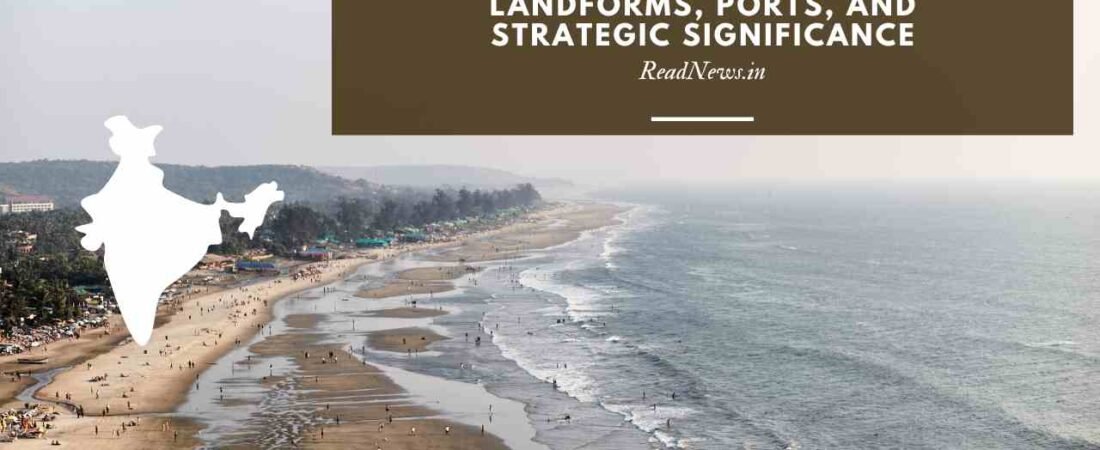


Introduction to India’s Coastal Geography
India’s coastal geography is a fascinating and diverse aspect of the nation’s overall landscape. Spanning over 7,500 kilometers, the coastline of India extends along the western and eastern shores, presenting a rich tapestry of geographical features that are integral to the country’s identity. This extensive coastline plays a pivotal role in the ecology, economy, and culture of the communities that inhabit these regions.
The Indian coastline is characterized by a variety of landforms, including sandy beaches, rocky cliffs, estuaries, and lagoons. This diversity not only contributes to the stunning beauty of the coastal regions but also has practical implications for local industries such as fishing, tourism, and shipping. The varying topography offers habitats for a multitude of marine and terrestrial species, making coastal areas invaluable for biodiversity.
Moreover, the strategic significance of India’s coastline cannot be overstated. With several key ports located along its shores, the coastline facilitates international trade and maritime activities, strengthening India’s economic position in the global market. Ports such as Mumbai, Chennai, and Kolkata are crucial nodes that enhance connectivity and trade, supporting the livelihoods of millions of people and serving as gateways for goods in and out of the country.
Additionally, the cultural significance of India’s coastal geography is evident in the myriad of traditions, customs, and lifestyles of coastal communities. These communities are often intricately connected to the sea, relying on fishing and marine resources for sustenance and economic stability. This interdependence has shaped their cultural identities and practices, contributing to the rich tapestry of India’s diverse heritage.
Landforms along the Indian Coast
The coastal geography of India is characterized by a diverse array of landforms that underscore its ecological richness and geographical complexity. The Indian coastline stretches approximately 7,500 kilometers, featuring a variety of landscapes including sandy beaches, cliffs, lagoons, estuaries, and deltas, each shaped by unique geological processes. Sandy beaches, which are predominantly found on the western and eastern coasts, serve as key recreational and tourism hubs. These beaches are formed primarily from the deposition of sediments carried by rivers and wave action, providing essential habitats for numerous marine species.
Cliffs, particularly prominent along the Western Ghats and parts of Maharashtra, are formed through processes such as erosion and tectonic uplift. These steep landforms not only serve as dramatic backdrops to the coastline but also play a crucial role in supporting diverse habitats. The erosion-resistant nature of certain rock types allows these cliffs to withstand the relentless energy of ocean waves, which in turn sustains unique ecosystems on and around them.
Lagoons and estuaries, commonly found in places such as the Sundarbans and the backwaters of Kerala, are another significant feature of India’s coastal geography. These water bodies, where freshwater and saltwater mix, are crucial for various fish species and provide important feeding and breeding grounds that enrich marine biodiversity. Deltas, particularly like the Ganges and Brahmaputra Delta, showcase intricate formations resulting from sediment deposit as rivers reach the sea. They are among the most fertile regions of the country, fostering agriculture while also serving as vital ecological zones supporting a plethora of wildlife.
Overall, the various landforms along the Indian coast illustrate not only the geomorphological processes at play but also the rich biodiversity that these ecosystems offer. Each of these coastal landforms contributes uniquely to India’s environmental narrative, serving both ecological functions and socio-economic purposes that are critical for the communities reliant on the ocean.
Major Ports on the Indian Coast
The Indian coastline, stretching over 7,500 kilometers, is home to a network of major ports that play a crucial role in the country’s economy and trade. These ports can be categorized into natural and artificial ports, each having its significance and functionality. Among the natural ports, Kochi and Visakhapatnam stand out due to their strategic locations and deep-water capacities, which facilitate the docking of large vessels.
Kochi, located on the southwestern coast of India, has a rich maritime history dating back to ancient trade routes with foreign nations. Its natural harbor is protected by the nearby islands, allowing ships to anchor safely. Today, Kochi is a vital hub for container shipping and cruise tourism, and its economic importance is further enhanced by the presence of various shipbuilding and repair industries.
On the eastern coast, Visakhapatnam serves as a major seaport with the advantage of being one of the largest artificial harbors in the country. The Port of Visakhapatnam has evolved significantly since its inception in the 1930s, becoming a center for cargo handling and industrial activities. The city’s proximity to key industries, including steel manufacturing and shipbuilding, makes it an indispensable part of India’s maritime infrastructure.
Other notable ports include Mumbai, Chennai, and Tuticorin, which are integral to maritime trade, handling significant volumes of cargo through container and bulk shipments. Moreover, Mundra, a private port on the western coast, has rapidly emerged as the largest container port in India, further illustrating the country’s growing capacity for international trade.
In essence, the major ports along the Indian coastline not only facilitate trade and commerce but also contribute to regional development and international relations. Their historical evolution reflects broader economic trends, making them vital assets in India’s coastal geography.
Economic Impact of Coastal Geography
India’s coastal geography is not just a natural gift but also an economic treasure trove. The vast Indian coastline, stretching over 7,500 kilometers, offers an array of economic opportunities that are vital to the nation’s economy. One of the most significant contributions of the coastal regions is the fisheries sector, which supports millions of livelihoods. The diverse marine ecosystem encourages the fishing industry, which not only fulfills domestic demand for seafood but also positions India as a vital exporter in international markets. This industry plays a crucial role in ensuring food security and providing employment for communities dependent on marine resources.
Moreover, the tourism sector flourishes along India’s coasts, attracting millions of domestic and international tourists each year. Popular coastal destinations such as Goa, Kerala, and the Andaman and Nicobar Islands draw visitors with their natural beauty, cultural heritage, and recreational activities. The tourism industry generates substantial revenue, creating jobs and stimulating local economies through hospitality, transport, and associated services. This sector’s growth is a direct result of the strategic positioning of India’s coastlines, enhancing the overall appeal of these regions.
In terms of shipping and trade, India’s ports serve as gateways for global commerce. The presence of major ports such as Mumbai, Chennai, and Kolkata facilitates the movement of goods both for imports and exports, thereby significantly contributing to the national economy. These ports enhance connectivity, reduce trade costs, and improve efficiency, allowing Indian products to reach international markets with relative ease. Consequently, the shipping industry creates additional jobs and promotes infrastructure development in coastal areas.
In essence, the economic impact of India’s coastal geography is profound and multifaceted. It encompasses a broad spectrum of activities including fisheries, tourism, and trade, which together support the livelihoods of millions and contribute substantially to the nation’s economy. The strategic significance of these coastal areas continues to inform policy-making and developmental strategies aimed at maximizing their potential.
Strategic Importance of India’s Coastline
The coastline of India spans approximately 7,516 kilometers and encapsulates a variety of geographical features, making it one of the most significant maritime territories in the world. Its strategic importance is underscored by its role in national security, defense, and international maritime trade routes. In a regional context, India’s coast is pivotal for securing sea lines of communication that are vital to national interests, especially in the Indian Ocean Region (IOR).
From a defense perspective, India’s coastal geography facilitates the establishment of naval bases and strategic ports that enhance surveillance and deterrence capabilities against potential maritime threats. The key ports such as Mumbai, Chennai, and Kochi serve not only as commercial hubs but also as strategic assets that support military logistics. Moreover, the location of these ports enables swift naval deployment, ensuring that India can promptly respond to security challenges in the IOR.
In addition, India’s coastline plays a fundamental role in international trade. As one of the fastest-growing economies in the world, India relies heavily on its ports for the export and import of goods. The Indian coastline acts as a significant gateway for global maritime trade, connecting India with crucial international markets. An efficient maritime trade route promotes economic growth, which consequently empowers India’s position on the global stage.
The Indian government has recognized the strategic significance of its coastline and is actively investing in enhancing infrastructure and capabilities along the coast. Initiatives such as the Sagarmala Project aim to modernize ports and improve coastal connectivity, further fortifying India’s strategic position in the IOR. In conclusion, the strategic importance of India’s coastline is multifaceted, impacting national security, defense, and facilitating international trade, thereby shaping the country’s geopolitical stance in the region.
Environmental Challenges Facing Coastal Areas
The coastal regions of India, characterized by their rich biodiversity and vibrant human settlements, face a myriad of environmental challenges. Erosion stands out among these issues, with many coastlines experiencing significant land loss due to natural processes and anthropogenic activities. This erosion not only threatens the integrity of coastal landforms but also jeopardizes human settlements, fisheries, and local economies that depend on stable coastlines.
Pollution further complicates the environmental landscape of India’s coastal areas. Industrial discharges, urban runoff, and inadequate waste management practices contribute to the degradation of marine ecosystems. Polluted waters affect aquatic life, disrupt food chains, and contaminate resources vital for local communities. Marine pollution also poses health risks to the populations reliant on these waters for their livelihood, creating a nexus of environmental and public health issues.
Climate change amplifies these challenges, leading to rising sea levels and increased frequency of extreme weather events. Coastal areas are particularly vulnerable to these changes, suffering from inundation and habitat loss. The impacts of climate change threaten biodiversity, including various marine species and coastal habitats such as mangroves and coral reefs, which are crucial for maintaining ecological balance.
Habitat destruction is another pressing issue, driven by urban development, mining, and agriculture. As natural habitats are converted for human use, species richness is diminished, and ecosystems become increasingly fragile. The loss of critical ecosystems has cascading effects, affecting not only local fauna and flora but also human populations dependent on these resources for food, shelter, and income.
Collectively, these environmental challenges underscore the need for targeted conservation efforts and sustainable management practices in India’s coastal regions. Addressing these issues is crucial for protecting biodiversity and supporting the livelihoods of millions who call these areas home.
Conservation Efforts and Sustainable Development
Coastal ecosystems in India are notably rich in biodiversity yet are increasingly under threat due to human activities and climate change. To counter these challenges, various conservation initiatives and sustainable development policies have been implemented by both governmental and non-governmental organizations. These efforts aim to preserve delicate coastal habitats while also promoting economic growth and community well-being.
The Indian government has launched several programs focused on marine conservation, such as the National Marine Fisheries Policy and the Integrated Coastal Zone Management (ICZM) program. These initiatives emphasize sustainable practices in fishing, tourism, and coastal development to ensure ecosystems remain intact. Community engagement plays a pivotal role in these strategies; local communities have been encouraged to participate actively in conservation efforts, fostering a sense of stewardship towards their coastal environments.
In addition to national efforts, international collaborations have also been fostered to enhance conservation frameworks. Partnerships with global organizations and foreign governments have facilitated knowledge sharing and capacity-building initiatives aimed at strengthening coastal and marine management. These collaborations often focus on issues such as pollution control, habitat restoration, and biodiversity preservation, directly addressing the vital requirement for an integrated approach to coastal management.
Moreover, awareness campaigns are critical to mobilizing public support and participation in conservation. Educational programs directed towards local populations inform them about the importance of sustainable practices. These campaigns also highlight the impact of pollution and alternate solutions, promoting the choice of eco-friendly alternatives in daily life.
By committing to these comprehensive conservation strategies, India aims to mitigate environmental degradation while ensuring that coastal regions are preserved for future generations. Combining policy, community involvement, and international cooperation constitutes a holistic approach needed to safeguard India’s coastal landscapes.
Case Studies: Successful Coastal Management
Coastal management in India has seen notable successes through various projects and initiatives aimed at sustainable development and environmental conservation. One prominent example is the Integrated Coastal Zone Management (ICZM) initiative, which encompasses multiple states along the Indian coastline. This approach emphasizes balancing ecological integrity with socio-economic development, integrating local knowledge and community participation in its implementation.
Another significant initiative is the Coastal Regulation Zone (CRZ) notification, which aims to protect coastal ecosystems from unregulated urbanization and industrialization. By delineating zones where development is permissible and restricting activities in ecologically sensitive areas, CRZ has been instrumental in preserving India’s rich biodiversity. This regulatory framework has led to successful outcomes in regions like Odisha, where coastal ecosystems have been restored through systematic reforestation and community-driven conservation projects.
Further exemplifying successful coastal management is the ‘Sagar Mangal’ project, which was launched in Maharashtra. This scheme focuses on promoting sustainable fisheries and aquaculture practices, thereby providing alternative livelihoods for local fisherman while also enhancing marine biodiversity. By implementing innovative fisherfolk training programs and collaborative resource management, the project has demonstrated a sustainable model of coastal resource utilization that other coastal states could replicate.
In addition to these initiatives, community-led conservation efforts, particularly those involving mangrove restoration along the Sundarbans delta, have proved effective. Local communities have engaged in replanting mangroves, which play a crucial role in protecting shorelines from erosion and acts as a habitat for diverse marine life. Such initiatives underline the importance of collective community action in successful coastal management, showcasing how local involvement can enhance ecological resilience.
Conclusion: The Future of India’s Coastal Geography
The coastal geography of India holds significant importance not only for its natural beauty and ecosystems but also for its economic and strategic relevance. As highlighted throughout this blog post, the diverse landforms along the Indian coastline provide various ecological services, support livelihoods, and serve as crucial nodes for trade and transportation. However, the burgeoning pressures of development and urbanization necessitate a careful reevaluation of how these coastal regions are managed and preserved.
Balancing development with conservation in India’s coastal areas is paramount. Policymakers must prioritize sustainable practices that protect coastal ecosystems while allowing for growth that benefits local communities. This dual focus will be essential in addressing challenges such as erosion, habitat loss, and the impacts of climate change, which jeopardize both natural and human systems along the coast. Future development must embrace climate-resilient strategies, ensuring that infrastructure is not only functional but also harmonized with the ecological characteristics of the surroundings.
The role of policy-making becomes increasingly critical as India navigates the complexities associated with its coastal geography. By fostering collaboration among various stakeholders, including government agencies, local fishermen, environmental groups, and the private sector, a comprehensive approach towards coastal management can be established. Initiatives aimed at protecting marine biodiversity, restoring habitats, and regulating coastal construction will be vital in sustaining the livelihoods of communities that depend on these ecosystems.
In essence, the future of India’s coastal geography hinges upon informed policy decisions that integrate environmental conservation with socio-economic development. Ensuring the sustainability of these regions not only protects their unique landscapes and biodiversity but also enhances the nation’s overall resilience in the face of various challenges posed by climate change and industrial activities.