

Introduction
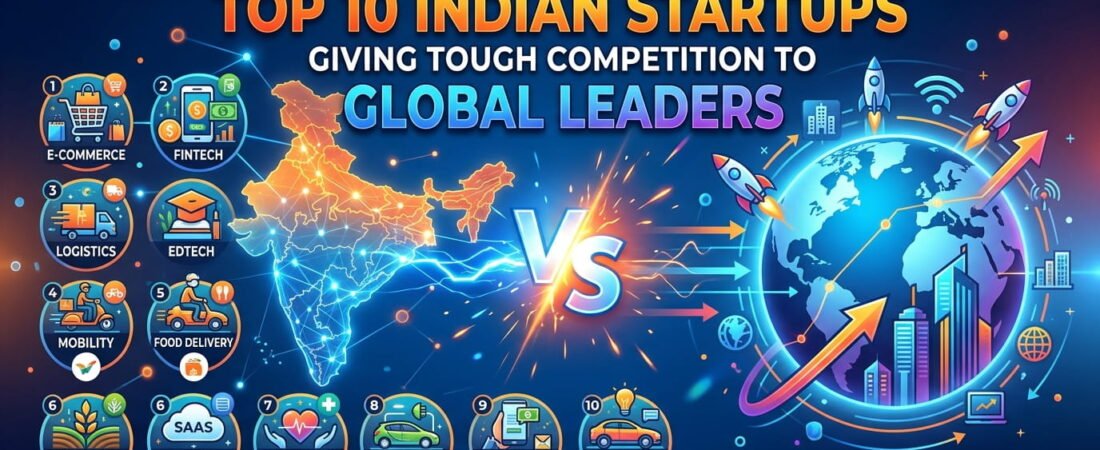
The Indian startup ecosystem has experienced remarkable growth over the past decade, signifying a transformative phase in the nation’s economic landscape. From cutting-edge technology to innovative solutions, Indian entrepreneurs have been making significant strides, contributing to a diverse range of sectors, including fintech, e-commerce, health tech, and more. This vibrant environment has birthed numerous startups that not only cater to domestic needs but also have expanded their reach to global markets, thereby intensifying competition against well-established international players.
With a booming population that is increasingly tech-savvy, India presents a lucrative market for new ideas and enterprises. The government has played a proactive role by implementing policies that encourage innovation and entrepreneurship, further enhancing the startup environment. Initiatives such as “Startup India” provide invaluable support in terms of funding, mentorship, and resources, fostering a climate ripe for new business ventures.
Moreover, the technological advancements in mobile broadband and internet accessibility have facilitated the emergence of startups that leverage digital platforms effectively. This shift has helped Indian startups gain a foothold in the global market, directly competing with established industry leaders. The increasing inflow of venture capital and significant investments from both domestic and foreign investors into these startup ventures illustrates the heightened confidence in their potential for growth and scalability.
As we delve into this blog post, we will explore ten Indian startups that are making significant impacts and challenging the status quo in their respective industries. These companies embody the vibrant spirit of Indian entrepreneurship and serve as a testament to the country’s potential as a hub for global innovation.
Criteria for Selection
In selecting the top 10 Indian startups that are giving tough competition to global leaders, a comprehensive set of criteria was established to ensure that the assessment is meticulous and unbiased. Each startup was scrutinized based on several key parameters that reflect their potential impact and competitiveness in the global market.
One of the foremost criteria is market influence. This assesses how the startup has positioned itself within its industry and the extent of its reach in terms of market share. It is essential to gauge not only current prominence but also the potential for future growth in a rapidly evolving business environment. Furthermore, technological innovation plays a pivotal role in this evaluation. Startups that leverage cutting-edge technologies or create groundbreaking solutions are often better positioned to disrupt existing markets and set new standards.
Funding rounds are another critical factor considered in the selection process. The ability to attract substantial investment from reputable venture capitalists or investors can serve as a strong endorsement of a startup’s viability and scalability. This criterion closely ties into revenue growth, which is a tangible indicator of a startup’s performance and market acceptance. Startups that demonstrate consistent and significant revenue increases are viewed as having a sustainable business model and potential for long-term success.
Lastly, global reach is a consideration that highlights how well an Indian startup has expanded or plans to expand its operations and influence beyond domestic borders. Startups that successfully navigate international markets contribute not just to their growth but also to India’s reputation as a thriving hub for innovation. By analyzing these criteria, the selection aims to provide a clear context for ranking the startups and facilitating an understanding of their standings in the ever-evolving global business landscape.
Zomato: Revolutionizing Food Delivery
Zomato has emerged as one of India’s most prominent startups, making noteworthy strides in the food technology sector. Founded in 2008, Zomato began its journey as a restaurant discovery platform, allowing users to explore and compare dining options. Over the years, it has evolved into a comprehensive food delivery service, connecting consumers with eateries across various regions. The company’s unique business model leverages technology to provide convenience, allowing customers to order food easily via its user-friendly mobile application and website.
As a part of its growth trajectory, Zomato has expanded its operations not only within India but also to numerous international markets, demonstrating an impressive adaptability in diverse culinary landscapes. This expansion has been bolstered by strategic investments and acquisitions that enhance its service capabilities. Zomato’s emphasis on customer satisfaction, data analytics, and efficient logistics has fueled its rapid growth, positioning it to compete effectively against global leaders such as Uber Eats and DoorDash.
The influence of Zomato on the global food tech industry is significant. It has pioneered initiatives focused on sustainability and has emphasized the importance of local cuisine, thus enriching the consumer experience. Additionally, the company has capitalized on technology trends such as contactless delivery and real-time tracking to meet changing consumer demands. Its competitive pricing strategies and promotional offers further enhance its market presence.
In a landscape dominated by international giants, Zomato successfully differentiates itself through localized offerings and custom user experiences. As globalization pushes food service companies to innovate, Zomato’s achievements underscore the potential of Indian startups to confront and navigate this competitive environment, making it a noteworthy contender in the global food delivery market.
Paytm: A Leader in India’s Digital Payments Landscape
Paytm has emerged as a formidable player in India’s rapidly evolving digital payments landscape. Founded in 2010, the platform initially gained popularity as a mobile wallet, enabling users to make seamless transactions through their smartphones. Over the years, Paytm has expanded its services significantly, transforming into a comprehensive financial services ecosystem, often referred to as a ‘super app.’ This transformation allows users to access a wide range of services, including online shopping, bill payments, ticket bookings, and even financial products such as insurance and loans.
Currently, Paytm boasts a user base of over 350 million registered users, making it one of the largest digital payment platforms in India. The company’s success can be attributed to its diverse offerings and user-friendly interface, which has ensured a steady growth in adoption across various demographics. Its strategic partnerships with merchants and service providers further enhance the platform’s usability, thereby encouraging more users to adopt digital transactions.
In terms of competition, Paytm faces stiff challenges from global leaders like PayPal and Square, both of which have established a strong foothold in the digital payments space. However, Paytm differentiates itself through its localized approach, tailoring its services to meet the unique needs of the Indian market. For instance, the integration of regional languages and features catering to both urban and rural areas has played a crucial role in expanding its reach beyond metropolitan cities.
Furthermore, Paytm has been proactive in adopting advanced technologies such as Artificial Intelligence and Machine Learning to enhance user experience and security. These innovations ensure that Paytm not only competes with global giants but also sets new benchmarks in the digital payments ecosystem.
Ola: Revolutionizing Mobility in India
Ola, founded in 2010, has rapidly established itself as one of the leading ride-hailing services in India. Originally started as a taxi aggregation platform in Mumbai, it has since transformed the transportation landscape by providing an alternative to traditional taxi services. The company’s growth trajectory has been marked by innovative strategies that enable it to compete fiercely against global giants like Uber.
A key component of Ola’s competitive strategy lies in its understanding of the Indian market and its localized approach. Unlike Uber, which primarily focuses on profitability strategies, Ola has invested heavily in optimizing user experience and building a resilient driver-partner ecosystem. This includes offering features such as flexible fare structures, regional language support, and targeted promotions that cater to various demographics across urban and rural settings. Furthermore, Ola’s commitment to providing affordable rides has significantly contributed to its growing user base.
In addition to its domestic operations, Ola has expanded its footprint internationally, with ventures in countries such as Australia, the United Kingdom, and New Zealand. This globalization strategy has enabled Ola to leverage its technology and operational expertise to compete on a broader scale. Notably, the competitive landscape is further complicated by local players in these markets, prompting Ola to adapt and innovate continuously.
Moreover, Ola is making substantial strides in the electric vehicle (EV) sector, aligning with global sustainability trends. The company’s investment in electric mobility through initiatives such as Ola Electric not only positions it as a responsible corporate player but also supports its long-term vision of creating a sustainable and green future for transportation. The launch of electric scooters and a dedicated EV ecosystem demonstrates Ola’s commitment to transforming the ride-hailing industry while securing its position as a formidable competitor to global leaders.
Byju’s: Revolutionizing Education
Byju’s is a prominent player in the edtech sector, transforming the educational landscape in India and beyond. Founded in 2011 by Byju Raveendran, the platform offers an innovative and engaging learning experience for students from kindergarten through 12th grade, as well as preparation programs for competitive examinations. Byju’s uses a combination of interactive video lessons, personalized learning journeys, and adaptive assessments, which cater to diverse learning styles and paces. The company’s unique approach ensures that students grasp complex concepts effectively.
One of Byju’s significant achievements is its ability to attract substantial funding, making it one of the most valuable edtech companies globally. It has raised millions from various investors, including big names like Sequoia Capital and the Chan Zuckerberg Initiative. This financial backing has enabled Byju’s to expand its offerings and enhance its technology, solidifying its position in the competitive edtech market. As a result, Byju’s has grown rapidly, acquiring several startups and enhancing its product portfolio to better serve students and educators alike.
Byju’s is in direct competition with established global entities like Khan Academy and Coursera, which are known for their diverse academic resources and courses. However, Byju’s strategy of focusing on a tailored curriculum designed for Indian students has allowed it to carve out a unique niche. By offering content in local languages and aligning its curriculum with national educational standards, Byju’s addresses the specific needs of its target audience, thus differentiating itself from international competitors. Ultimately, Byju’s continues to evolve the education sector, making substantial strides both nationally and on the global stage.
OYO Rooms
OYO Rooms, founded in 2013 by Ritesh Agarwal, has emerged as a formidable player in the global hospitality industry. The company’s rapid growth has positioned it as one of the largest hotel chains worldwide, inviting comparisons to established brands such as Marriott and Airbnb. OYO’s business model revolves around aggregating hotel properties and standardizing the quality of services provided, which has enabled it to offer affordable yet quality accommodation to travelers.
One of the critical factors contributing to OYO’s competitive edge is its technology-driven approach to operations. The company leverages data analytics and artificial intelligence to optimize pricing, enhance customer experience, and manage its inventory efficiently. By utilizing advanced algorithms to analyze market trends, OYO is capable of setting dynamic pricing that adjusts in real time, ensuring that it remains accessible to a broad demographic. This pricing strategy not only attracts budget-conscious travelers but also provides value to hotel owners through increased occupancy rates.
Furthermore, OYO Rooms has made strategic partnerships to expand its footprint internationally. The brand has successfully entered various markets, including Europe, Southeast Asia, and the United States, where it has adapted its services to meet local demands. This localization strategy has helped OYO to resonate with different cultures and preferences, differentiating itself from competitors who primarily target a specific market segment.
In addition to these tactics, OYO maintains a strong focus on customer service. By ensuring that properties meet its brand standards, OYO not only retains customer trust but also builds brand loyalty. As a result, it has been able to establish a niche that allows it to thrive alongside well-established hospitality giants. OYO’s innovative approach not only demonstrates agility but also reinvigorates traditional hospitality dynamics, solidifying its position as a key player in the global market.
Startup #6: Razorpay
Founded in 2014 by Harshil Mathur and Shashank Kumar, Razorpay has rapidly emerged as a prominent player in the Indian fintech landscape, providing comprehensive online payment solutions that streamline transactions for businesses of all sizes. As digital commerce flourishes, Razorpay has carved a niche by simplifying the often complex payment processes that merchants face, enhancing both customer experience and operational efficiency.
At its core, Razorpay offers a robust platform that supports multiple payment methods, including credit cards, direct bank transfers, UPI, and popular wallets, allowing merchants to cater to a diverse clientele. This versatility in payment options is crucial in India, where consumer preferences are continuously evolving. Razorpay’s technology-driven approach has resulted in features like automated reconciliation, instant refunds, and fraud detection, thereby empowering businesses to manage their payment flows more effectively.
The fintech startup has experienced significant growth since its inception, boasting a clientele that ranges from small enterprises to established giants like Zomato, Cred, and Ola. Its comprehensive suite also includes Razorpay Capital, which provides credit services tailored to the needs of businesses, enabling them to thrive even amidst fiscal constraints. This innovative approach sets Razorpay apart from competitors such as Stripe and Square, both of which focus primarily on payment processing but lack the extensive suite of financial services that Razorpay offers.
Moreover, Razorpay’s commitment to continuous innovation is evident in its recent initiatives, including the introduction of advanced analytics tools that help businesses track performance and optimize their payment strategies. By maintaining a customer-centric approach and fostering an environment of innovation, Razorpay has established itself not only as a leader in online payment processing but also as a formidable competitor on the global stage.
Swiggy: A Game Changer in Food Delivery
Swiggy, launched in 2014, has rapidly ascended to become a pivotal player in India’s food delivery market, reshaping the landscape of how consumers enjoy their meals. With a mission to deliver food in a hassle-free manner, Swiggy has established itself as a preferred choice among urban consumers, often surpassing expectations with its efficient service and comprehensive offerings.
One of the unique features that sets Swiggy apart from its competitors, including Zomato, is its end-to-end delivery model. This approach allows Swiggy to maintain a high level of control over the delivery process, ensuring that food arrives hot and fresh at customers’ doorsteps. Additionally, the app’s user-friendly interface and reliable tracking system enhance the overall customer experience. Flexible payment options, including the acceptance of digital wallets and cash on delivery, further improve accessibility for a diverse clientele.
Swiggy’s rapid growth can be attributed to its ability to innovate and expand its offerings. The introduction of Swiggy Genie, a hyperlocal delivery service, illustrates the startup’s adaptability and ambition to cater to a wider range of consumer needs. This diversification not only propels its brand image but also enhances its competitive edge against not only Indian rivals but also international players like Deliveroo.
Holding a significant market share, Swiggy is engaged in a fierce rivalry with Zomato, leading to a dynamic competition that drives both companies to elevate their services continually. This competition has resulted in enhanced technology offerings, promotional discounts, and loyalty programs, benefiting consumers in the long run. Swiggy’s commitment to quality and customer satisfaction has established it as a formidable contender in the food delivery space, underlining its status as a leading startup in India poised to take on global challenges.
Conclusion
The emergence of Indian startups has redefined the global business landscape, showcasing remarkable advancements and innovative strategies that compete with established international leaders. Startups such as Ola, Zomato, and Paytm have disrupted traditional markets by introducing new products and services that resonate with consumers both in India and beyond. These companies not only reflect the entrepreneurial spirit endemic to India but also demonstrate the ability to scale operations and adapt to rapidly changing market dynamics.
In recent years, the Indian startup sector has ramped up its global presence, particularly in technology, e-commerce, and financial services, contributing significantly to economic growth and job creation. Investors are increasingly taking note of India’s potential as a fertile ground for innovation, with venture capital inflow at record levels. The competitive landscape has turned more vibrant, encouraging startups to continuously evolve and improve upon their offerings to maintain an edge in the market.
Looking ahead, the future prospects for the Indian startup ecosystem seem promising. With growing digital adoption and a youthful demographic, there are ample opportunities for further innovation. Additionally, the trend of collaborating with foreign companies opens pathways for knowledge transfer and resource sharing, further enhancing competitiveness. As existing companies continue to diversify and new players emerge, it is likely that India will maintain its trajectory as a key contender in the global startup arena. The potential for Indian startups to challenge and even surpass global counterparts remains robust, positioning the country as a pivotal player on the world stage.