Introduction: Breathing in the Crisis
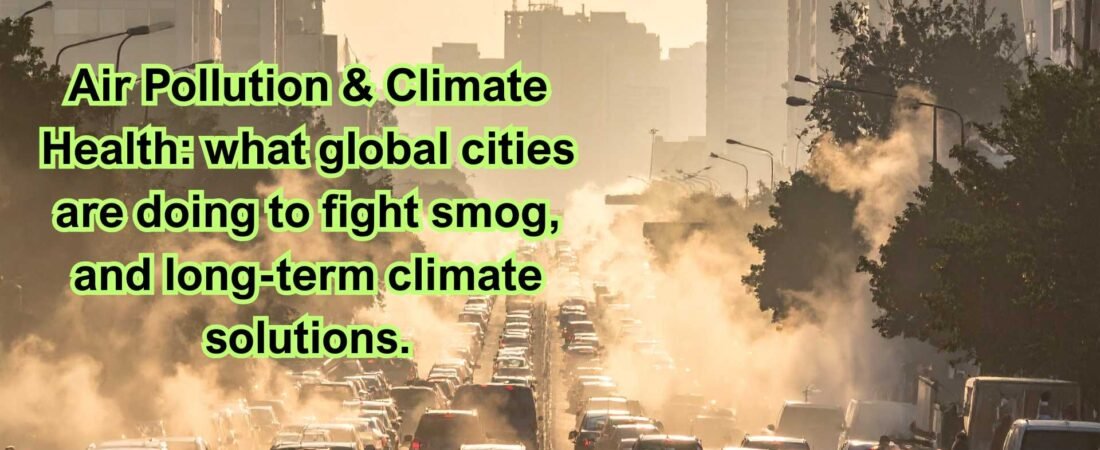
Air pollution has emerged as one of the most pressing public health and environmental challenges of our time, and nowhere is this more evident than in Delhi. The city, home to more than 30 million people, frequently records air quality levels that are among the worst in the world. Thick blankets of smog often obscure the skyline, turning everyday life into a struggle against invisible toxins. This crisis is not confined to Delhi alone; it reflects a broader global pattern where rapid urbanization, unchecked industrial growth, and reliance on fossil fuels have combined to create hazardous living environments. The issue is deeply intertwined with climate change, as the very pollutants that choke our lungs also trap heat in the atmosphere, accelerating global warming.
The significance of air pollution lies not only in its immediate visibility but in its silent, long-term impact on human health. Fine particulate matter (PM2.5 and PM10), nitrogen oxides, sulfur dioxide, and ground-level ozone infiltrate the respiratory system, leading to chronic diseases, reduced life expectancy, and increased vulnerability to pandemics. For children, the elderly, and those with pre-existing conditions, the risks are even greater. The World Health Organization has consistently warned that air pollution is responsible for millions of premature deaths annually, making it a global health emergency.
Yet, the crisis also presents an opportunity. Cities across the world—from Beijing to Los Angeles—have demonstrated that smog is not inevitable. Through stringent policies, technological innovation, and citizen participation, they have managed to reverse decades of damage. Delhi’s plight, therefore, is not a hopeless story but a call to action. It is a reminder that clean air is a fundamental human right, and safeguarding it requires collective effort across governance, industry, and society.
This article explores the multifaceted dimensions of air pollution and climate health. It begins with Delhi’s struggle as a case study, examines the health impacts of polluted air, highlights global success stories in combating smog, and concludes with long-term climate solutions that can secure a healthier, more resilient future. By weaving together local realities and global lessons, the aim is to provide a timeless explainer that not only informs but also inspires action.
1. Delhi’s Air Pollution Crisis: A Case Study in Urban Vulnerability
Delhi has become a global symbol of urban air pollution, with its Air Quality Index (AQI) frequently crossing into the “severe” category, sometimes exceeding 400 during winter months. This toxic haze is driven by multiple factors: vehicular emissions, industrial activity, construction dust, crop residue burning in neighboring states, and weak enforcement of pollution control measures. Seasonal weather patterns, particularly temperature inversions in winter, trap pollutants close to the ground, creating a blanket of smog that lingers for days.
The health and economic consequences are staggering. A World Bank report estimated that air pollution costs nearly 5% of global GDP annually, with Delhi contributing significantly to this burden. Families spend more on healthcare, productivity declines due to respiratory illnesses, and tourism suffers as visitors avoid the city during peak smog seasonsIndia Today. The crisis is not just environmental—it is deeply social and economic, affecting education (school closures), transport, and even cultural life.
Government responses such as the Graded Response Action Plan (GRAP) have attempted to impose emergency measures like restricting construction, halting diesel generator use, and limiting vehicular traffic. Yet experts argue these are short-term fixes that fail to address structural causes. The persistence of hazardous air quality highlights gaps in urban planning, infrastructure, and enforcement. Delhi’s struggle is mirrored in other Indian cities, where rapid urbanization and weak governance exacerbate pollution and climate risks.
Delhi’s story is a cautionary tale: without systemic reforms, cities risk becoming unlivable. The capital’s plight underscores the urgent need for integrated strategies that combine technology, governance, and citizen participation. It also illustrates how climate change and pollution intersect—extreme weather events like flooding compound the vulnerabilities of already stressed urban systems.
2. Health Impacts of Air Pollution: The Silent Epidemic
Air pollution is often described as an invisible killer. In Delhi, residents experience immediate symptoms such as coughing, burning eyes, and throat irritation. But the long-term effects are far more insidious. Studies link chronic exposure to fine particulate matter (PM2.5) with increased risks of asthma, chronic obstructive pulmonary disease (COPD), cardiovascular disease, and premature death. Children and the elderly are particularly vulnerable, with evidence suggesting impaired lung development in young populations.
Globally, the Institute for Health Metrics and Evaluation (IHME) estimates that air pollution contributes to 36% of lung cancer deaths and 20% of ischemic heart disease cases. In India, the burden is magnified by high population density and limited access to quality healthcare. The economic cost is immense: billions are spent annually on pollution-related illnesses, while lost working days reduce productivityThe Statesman.
The psychological toll is also significant. Living under constant smog creates anxiety, reduces outdoor activity, and diminishes quality of life. Parents worry about their children’s health, while athletes and outdoor workers face compromised performance. The cumulative effect is a society under stress, where pollution becomes a daily negotiation.
What makes air pollution particularly dangerous is its invisibility. Unlike floods or earthquakes, its damage is gradual and dispersed. This makes it harder to mobilize public outrage or political will. Yet the science is clear: prolonged exposure shortens life expectancy. For Delhi residents, breathing the city’s air can be equivalent to smoking multiple cigarettes a day.
The crisis is not confined to Delhi. Cities like Beijing, Los Angeles, and Mexico City have faced similar challenges, showing that air pollution is a universal urban health issue. The lesson is that health systems must integrate pollution mitigation into their strategies, treating clean air as a fundamental determinant of public health.
3. Global Cities Fighting Smog: Lessons in Innovation and Policy
While Delhi struggles, other global cities offer examples of how to combat smog. Beijing, once infamous for its “airpocalypse,” has implemented aggressive measures: relocating heavy industries, restricting coal use, and investing in renewable energy. The result has been a measurable improvement in air quality over the past decade. Similarly, Los Angeles, which faced severe smog in the mid-20th century, pioneered vehicle emission standards and catalyzed the development of catalytic converters. Today, while challenges remain, its air is far cleaner than in the 1970s.
London’s response to the Great Smog of 1952 was transformative. The Clean Air Act of 1956 restricted coal burning and introduced smokeless zones, setting a precedent for legislative action. More recently, London has introduced Ultra Low Emission Zones (ULEZ), charging vehicles that fail to meet emission standards. This policy has reduced nitrogen dioxide levels significantly.
Mexico City, once ranked among the most polluted cities, tackled its crisis by phasing out leaded gasoline, improving public transport, and relocating polluting industries. The city also invested in green spaces, recognizing their role in absorbing pollutants and improving urban resilience.
These examples highlight key strategies:
- Strict emission standards for vehicles and industries.
- Investment in renewable energy to reduce reliance on fossil fuels.
- Urban planning reforms that prioritize green spaces and public transport.
- Citizen engagement through awareness campaigns and incentives for cleaner practices.
Delhi can learn from these experiences. While local conditions differ, the principle remains: sustained political will, backed by science and citizen participation, can reverse pollution trends. Global cities show that smog is not inevitable—it is a solvable problem with the right mix of policy, innovation, and enforcement.
4. Long-Term Climate Solutions: Building Resilient Futures
Air pollution is inseparable from the broader climate crisis. Fossil fuel combustion, industrial emissions, and deforestation contribute both to local smog and global warming. Thus, solutions must be holistic, addressing both immediate air quality and long-term climate health.
Transitioning to renewable energy is paramount. Solar, wind, and hydroelectric power reduce emissions while providing sustainable energy security. Electrification of transport—through electric vehicles and improved public transit—can drastically cut urban pollution. Cities like Oslo and Shenzhen have demonstrated how rapid EV adoption can transform urban air quality.
Urban design also plays a critical role. Expanding green spaces, promoting vertical gardens, and investing in sustainable architecture can mitigate pollution while enhancing climate resilience. Waste management reforms, particularly reducing landfill emissions and promoting recycling, are equally vital.
Policy frameworks must align with global climate goals. India’s commitment to net-zero emissions by 2070 is ambitious, but achieving it requires local action in cities like Delhi. This includes stricter enforcement of industrial standards, incentives for clean technology, and integration of climate considerations into urban planning.
Citizen participation is the final pillar. Behavioral changes—such as reducing private car use, adopting energy-efficient appliances, and supporting clean energy initiatives—can collectively make a significant impact. Education and awareness campaigns are essential to build a culture of sustainability.
Ultimately, the fight against air pollution is a fight for climate health. Clean air is not just an environmental aspiration; it is a human right. Delhi’s crisis is a wake-up call for the world: without decisive action, urban centers risk becoming uninhabitable. But with innovation, policy, and collective will, cities can build resilient futures where both people and the planet thrive.
🌱 Conclusion: Towards a Breathable Future
The story of Delhi’s air pollution crisis is both alarming and instructive. It reveals the fragility of urban ecosystems when confronted with unchecked emissions, weak enforcement, and climate stress. But it also underscores the resilience of human societies when faced with existential threats. Air pollution is not an unsolvable problem; it is a challenge that demands urgency, innovation, and collaboration. The health impacts—from respiratory illnesses to cardiovascular diseases—are too severe to ignore, and the economic costs too high to bear. Clean air must be treated not as a luxury but as a non-negotiable necessity for human survival and dignity.
Global experiences provide hope. Cities like London, Los Angeles, and Beijing have shown that determined action can transform air quality within a generation. Their strategies—ranging from emission standards and renewable energy adoption to urban greening and public transport reforms—offer valuable lessons for Delhi and other cities grappling with smog. The key lies in sustained political will, backed by scientific evidence and citizen engagement. Short-term emergency measures may provide temporary relief, but only long-term structural reforms can secure lasting change.
Climate solutions are inseparable from air pollution strategies. Transitioning to clean energy, electrifying transport, redesigning cities for sustainability, and promoting behavioral shifts are essential steps. These measures not only reduce local pollutants but also mitigate global warming, creating a double dividend for health and climate. India’s commitment to net-zero emissions by 2070 is ambitious, but achieving it will require cities like Delhi to lead the way with bold, innovative policies.
Ultimately, the fight against air pollution is a fight for the future. It is about ensuring that children can play outdoors without fear, that workers can commute without inhaling toxins, and that communities can thrive in environments that nurture rather than harm. Clean air is a shared responsibility, and its protection demands collective action across borders, sectors, and generations. Delhi’s crisis is a wake-up call, but it can also be a turning point. By learning from global successes and committing to long-term climate health, we can envision a world where breathable air is guaranteed, and where cities are not symbols of pollution but beacons of resilience and sustainability.
- Insights By – CM Yadav ( M.A – Sociology, University of Lucknow )