
India’s copper mining industry represents more than mere resource extraction—it’s a narrative of economic ambition, regional development, and the perpetual tension between industrial growth and environmental stewardship. With reserves constituting less than 1% of global copper deposits, India’s mining regions have become laboratories of efficiency and innovation, each site telling a story of perseverance, technological evolution, and socioeconomic transformation.
Major Copper Mines of India
1. Malanjkhand Mine (Madhya Pradesh)
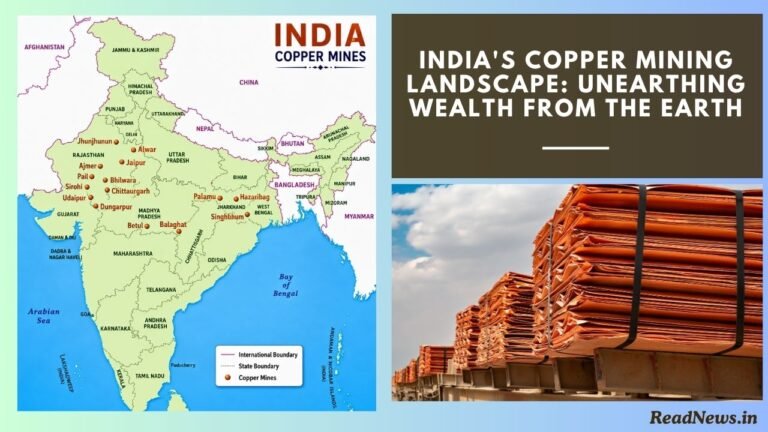
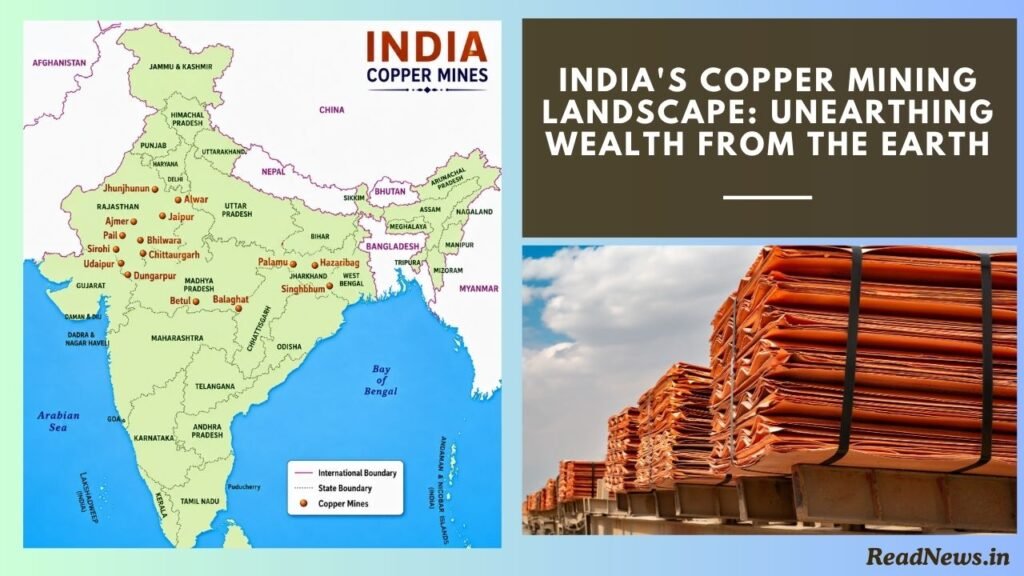
Located in Balaghat district, the Malanjkhand Mine stands as India’s copper crown jewel, accounting for nearly 52% of the nation’s total copper production. Operated by Hindustan Copper Limited, this integrated facility combines surface and underground mining operations across a landscape of granitic formations. The mine produced approximately 17.62 thousand tonnes of copper in 2023, a testament to its operational excellence. What makes Malanjkhand particularly significant is its pioneering approach to sustainable mining practices. The facility has implemented progressive environmental reclamation strategies in this ecologically sensitive region, setting benchmarks for responsible resource extraction across India. The mine’s success extends beyond production metrics—it represents India’s commitment to modernizing extraction techniques while maintaining ecological balance. The accompanying copper smelting and refining infrastructure demonstrates integrated value-addition, transforming raw ore into refined copper that fuels India’s electrical, automotive, and defense industries. Beyond economics, Malanjkhand’s operations have catalyzed regional employment, skill development, and infrastructure creation in central India.
2. Khetri Copper Belt (Rajasthan)
The Khetri Copper Belt in Jhunjhunun district represents India’s mining heritage meeting contemporary ambition. This region has been systematically exploited since the late 19th century, initially during the British colonial era, and continues to thrive as a major copper-producing hub. The Khetri Mine, operated by Hindustan Copper, produced approximately 2.87 thousand tonnes of copper in 2023, with projected operations extending until 2035. The belt encompasses integrated mining and metallurgical infrastructure, including sulfuric acid plants and fertilizer facilities that maximize resource efficiency. The landscape here tells a complex story—of colonial exploitation transformed into controlled national asset management. The mines operate at considerable depths, showcasing advanced technological sophistication developed over decades. Beyond copper extraction, the Khetri Belt represents industrial clustering in Rajasthan, attracting ancillary industries and service providers. The region’s economic ecosystem demonstrates how mineral wealth can catalyze broader development when managed strategically. The copper from these mines reaches markets globally, contributing to India’s foreign exchange earnings while supporting thousands of families dependent on mining-related employment.
3. Kolihan Mine (Rajasthan)
Situated in Rajasthan, the underground Kolihan Mine exemplifies the technical challenges and solutions inherent in India’s copper mining. Operated by Hindustan Copper, this facility produced 3.05 thousand tonnes of copper in 2023, contributing meaningfully to national production targets. As an underground operation, Kolihan presents different operational complexities compared to surface mining—requiring sophisticated ventilation systems, safety protocols, and extraction methodologies. The mine’s productivity reflects investments in mechanization and worker training programs that have become industry standards. What’s noteworthy about Kolihan is its role in demonstrating how underground mining can be executed safely and efficiently in the Indian context. The facility has implemented rigorous occupational health and safety measures, creating workplace standards that influence broader mining sector practices. The mine’s operations support local communities through employment, local procurement, and infrastructure development. Its existence validates India’s capacity to conduct complex underground mining operations comparable to global standards, challenging perceptions about Indian mining capabilities and modernization.
4. Banwas Mine (Rajasthan)
The Banwas underground mine in Rajasthan, operated by Hindustan Copper, produced approximately 1.87 thousand tonnes of copper in 2023. This smaller-scale operation compared to Malanjkhand demonstrates the diversity of India’s copper mining portfolio. Underground mining at Banwas involves intricate geology navigation, precise ore extraction, and efficient ore processing to maximize recovery rates. The mine operates within Rajasthan’s broader mineral wealth context, where copper coexists with other valuable mineral deposits. The facility’s operations reflect specialized expertise in subsurface mining—a technical domain requiring continuous innovation and worker skill development. Banwas contributes to regional economic sustenance, particularly in rural areas where mining employment provides income streams difficult to obtain through traditional agriculture. The mine’s scale, while modest nationally, represents significant economic importance locally. Its operations support supply chains, from equipment suppliers to transportation networks to processing facilities. The workforce at Banwas represents generations of mining expertise, families with deep roots in mineral extraction who view mining not merely as employment but as cultural identity and economic security.
5. Surda Mine (Jharkhand)
Located in Jharkhand, the Surda underground mine represents the eastern concentration of India’s copper extraction. Operated by Hindustan Copper, it produced 1.54 thousand tonnes of copper in 2023, with anticipated operations extending until 2028. Jharkhand’s mining legacy runs deep—from coal to copper, this state has historically supplied critical minerals fueling national development. The Surda Mine operates within the Singhbhum district region, recognized as a major copper-bearing formation. Underground mining in Jharkhand presents unique geological and hydrogeological challenges that have driven technological innovation in dewatering, ventilation, and ore handling. The facility represents Hindustan Copper’s eastern operations hub, crucial for maintaining national production diversity and supply chain resilience. Beyond production, Surda’s operations represent livelihood security for mining communities in a state where mineral-based employment has historically dominated economic structures. The mine’s workforce comprises both locally recruited labor and specialized technical personnel, creating knowledge hierarchies and career progression pathways. As operations approach 2028 conclusion, questions emerge about post-mining economic transition and community diversification strategies—issues increasingly central to responsible mining sector narratives globally.
6. Balaghat Region – The Copper Heartland (Madhya Pradesh)
Beyond Malanjkhand, Balaghat district encompasses multiple copper deposits and exploration areas that constitute India’s copper heartland. This region, spanning Balaghat and Chhindwara districts, contains geology rich in copper-pyrite, quartzite, and mica schist formations. The Balaghat region’s significance extends beyond current production—it represents India’s future copper security. Geological surveys identify substantial reserves here, suggesting decades of potential extraction. The region’s landscape—forests, agricultural lands, water bodies—exists in constant negotiation with mining activities. Local communities demonstrate complex relationships with copper mining: acknowledging economic benefits while expressing environmental concerns about water quality, air pollution, and land degradation. The Malanjkhand Copper Plant in this region serves as a refining facility, utilizing electrolysis to produce refined copper while simultaneously recovering gold, silver, and nickel as byproducts. This integrated value-addition transforms raw ore into premium products commanding global prices. The Balaghat region epitomizes India’s developmental paradox—the necessity of mineral extraction for economic growth confronting ecological preservation imperatives that increasingly preoccupy contemporary societies.
7. Jharkhand’s Singhbhum District – Eastern Copper Hub
Singhbhum district in Jharkhand represents the eastern anchor of India’s copper mining operations. This region has contributed substantially to India’s copper reserves historically, with documented copper deposits spanning multiple geological formations. The district encompasses both operational mines like Surda and numerous exploration areas identified for future development. Singhbhum’s mining culture reflects centuries of mineral extraction tradition, with indigenous knowledge systems existing alongside modern mining methodologies. The district’s communities possess deep familiarity with mining’s economic and social implications. Employment in copper mining here has traditionally provided income mobility for working-class families, though often at costs of occupational hazard exposure and limited long-term career security. Recent investments in mechanization and safety technology aim to improve working conditions while increasing productivity. The district’s copper industry intersects with broader development questions about tribal rights, land ownership, and benefit-sharing arrangements. Singhbhum’s mining narrative cannot be divorced from India’s larger conversation about equitable development, environmental justice, and respecting indigenous land claims—conversations increasingly shaping mining sector policies and regulations.
8. Rajasthan’s Copper Crescent – From Jhunjhunun to Ajmer
Rajasthan’s copper mining landscape extends across multiple districts, from Jhunjhunun’s Khetri belt through Alwar, Ajmer, Pali, Sirohi, Udaipur, and Dungarpur. This geographical spread indicates Rajasthan’s substantial copper resource base—approximately 50% of India’s identified copper reserves. The state’s semi-arid landscape has historically supported mining activities, with Rajasthan developing specialized expertise in managing mining operations in water-scarce regions. The Neem-Ka-Thana copper deposit represents one of several significant reserves awaiting optimal development. Mining in these districts involves navigating complex social landscapes—communities balancing agricultural traditions with mining economy opportunities, villages negotiating between preserving groundwater resources and accessing mining employment. Rajasthan’s copper mining reflects India’s federal structure, with state governments attempting to balance local environmental concerns against national mineral production targets. The region demonstrates how copper mining extends beyond single operations to systemic regional impacts—affecting water tables, agricultural productivity, labor migration patterns, and social stratification.
Meta Description
India’s copper mining landscape comprises eight major operations producing barely 2% of global copper, yet driving regional economies and setting environmental standards. This comprehensive exploration examines India’s major copper mines—from Malanjkhand’s dominance in Madhya Pradesh to Rajasthan’s copper crescent—analyzing production metrics, technological sophistication, sustainable practices, and the complex socioeconomic narratives shaping mineral extraction in contemporary India.
Disclaimer
This article presents factual information regarding India’s copper mining operations based on verified data from mining industry databases, government mineral reports, and geological surveys current as of 2024-2025. Production figures cited represent estimates from reputable mining intelligence sources (GlobalData, Ministry of Mines Annual Reports). Geographic locations, operational details, and production capacities are subject to change based on operational decisions, exploration results, and regulatory changes. This article does not constitute investment advice or constitute endorsement of mining operations. Environmental and social impact assessments require independent verification and local community consultation. Readers should consult official sources—Hindustan Copper Limited reports, Indian Bureau of Mines publications, and state mineral departments—for the most current operational data. Mining operations involve complex environmental, social, and governance considerations beyond the scope of this overview. Any citations or information usage should reference original sources and acknowledge the provisional nature of mineral industry data.
Author’s Note for Readers
As a writer approaching this subject through a sociological lens, I recognize that copper mining narratives extend beyond production statistics. These mines represent communities, livelihoods, ecological systems, and India’s developmental aspirations in complex, sometimes contradictory ways. The numbers matter—production targets, reserve quantities, export revenues—but the stories matter more: the families dependent on mining employment, the environmental transformations reshaping landscapes, the tensions between economic growth and ecological preservation, and the persistent question of whether mineral wealth genuinely benefits the communities from which it’s extracted.
Disclaimer
This article is based on verified data from mining databases, government mineral reports, and 2024-2025 geological surveys. Production figures are estimates from GlobalData and Ministry of Mines. Information is subject to change. This is not investment advice or operational endorsement. Environmental assessments require independent verification. Readers should consult Hindustan Copper, Indian Bureau of Mines, and state mineral departments for current operational data. Mining involves complex ESG considerations beyond this overview’s scope.