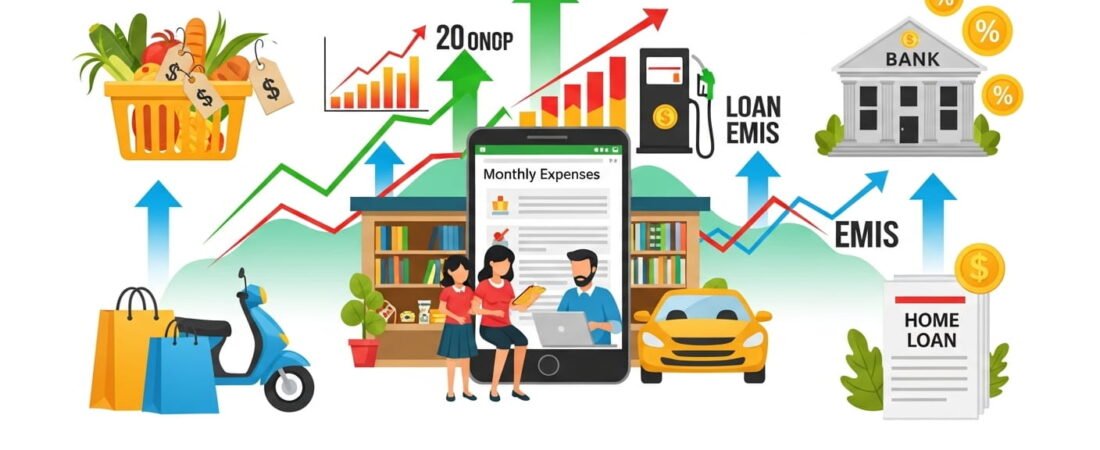


Introduction: Inflation Fuel Prices Interest Rates
Over the past few years, one concern has become common across almost every Indian household — rising expenses. Grocery bills keep climbing, petrol prices change frequently, and EMIs feel heavier than they once did. Yet, many people still view inflation, fuel prices, and interest rates as distant “economic news” meant only for experts. In reality, these factors directly influence your daily spending, savings, and long-term financial goals.
When inflation rises, your money loses purchasing power. Simply put, ₹100 today will buy fewer goods tomorrow. At the same time, higher fuel prices increase transportation and production costs, which eventually raise the prices of almost everything — from vegetables to mobile phones. Additionally, when the Reserve Bank of India changes interest rates, it directly impacts your home loan EMIs, car loan repayments, and even the returns on fixed deposits. This is why understanding these forces is no longer optional; it is essential for smart financial planning.
With a background in commerce and banking, I have observed that many middle-class families struggle not because their income is low, but because they lack awareness of how macroeconomic changes affect everyday financial decisions. People often blame ‘mehengaai’ without realizing how global oil prices, supply chain issues, and monetary policies connect with each other. Similarly, rising interest rates make people panic about EMIs, while they often ignore the potential benefits to savings.”
In a developing economy like India, inflation and fuel price volatility also shape consumer confidence. When people expect prices to keep rising, they either rush to spend or delay investments, both of which can harm financial stability. Understanding these trends helps you make informed, confident decisions instead of emotional ones.
This article breaks down why inflation, fuel prices, and interest rates matter to you — in simple, practical terms — because economics ultimately shapes your lifestyle, security, and financial freedom.
📌 Understanding Inflation: Why Your Money Buys Less Over Time
Inflation refers to the general increase in prices over time. While a moderate level of inflation is considered normal in a growing economy, high inflation can reduce your purchasing power significantly. In other words, if your salary does not increase at the same pace as inflation, you effectively become poorer even if your income remains the same.
For example, suppose your monthly grocery bill was ₹5,000 two years ago. Due to inflation, it might now be ₹6,500 or more. Although the quantity of items remains similar, you are paying more for the same goods. Therefore, inflation silently eats into your savings.
Moreover, inflation affects not only daily expenses but also long-term goals. If you plan to buy a house after five years, rising property prices can make that dream more expensive. Similarly, education costs and healthcare expenses tend to rise faster than average inflation. As a result, financial planning without considering inflation can lead to a major shortfall.
Additionally, inflation influences investment decisions. If your savings account offers 4% interest but inflation is 6%, your real return is negative. This means your money is losing value in real terms. Hence, understanding inflation helps you choose better investment instruments such as mutual funds, equity, or inflation-beating assets.
⛽ Fuel Prices: The Hidden Driver of Everyday Expenses
Fuel prices may seem relevant only if you own a vehicle. However, their impact goes far beyond your petrol bill. Fuel is a fundamental input in transportation, manufacturing, and supply chains. Therefore, when petrol and diesel prices increase, the cost of transporting goods also rises.
For instance, vegetables travel from farms to cities through trucks that run on diesel. If diesel prices rise, transportation companies charge more. Consequently, retailers increase prices to maintain their margins. Eventually, you pay more at the supermarket.
Furthermore, high fuel prices can affect public transport fares, airline tickets, and even online delivery charges. This creates a ripple effect across multiple sectors. In India, where a large portion of goods is transported by road, fuel price fluctuations significantly influence overall inflation.
In addition, global crude oil prices play a crucial role. Since India imports a substantial amount of crude oil, global market changes directly impact domestic prices. Therefore, geopolitical tensions or global supply disruptions can indirectly affect your monthly budget.
Understanding this connection helps you anticipate cost increases and adjust your spending patterns accordingly. Instead of reacting emotionally, you can prepare strategically by managing discretionary expenses.
📉 Interest Rates: How RBI Decisions Affect Your EMIs and Savings
Interest rates are controlled by the central bank — in India, the Reserve Bank of India (RBI). When inflation rises sharply, the RBI often increases interest rates to control spending and stabilize prices. However, this decision directly impacts borrowers and savers.
If you have a floating-rate home loan, a rate hike increases your EMI or extends your loan tenure. Consequently, your monthly financial burden rises. Similarly, car loans and personal loans become more expensive. Therefore, interest rate cycles are extremely important for borrowers.
On the other hand, higher interest rates can benefit savers. Fixed deposits, recurring deposits, and certain debt instruments may offer better returns. Thus, while borrowers may feel pressure, investors might find new opportunities.
Moreover, interest rates influence business investments and job creation. When borrowing becomes expensive, companies may delay expansion plans. This can indirectly affect employment and salary growth. Hence, interest rate changes are not just banking news — they shape the overall economic environment.
By staying informed about RBI policy decisions, you can plan loan prepayments, refinance options, or adjust investment allocations strategically.
🔄 The Interconnection: Why These Three Factors Move Together
Inflation, fuel prices, and interest rates are deeply interconnected. Rising fuel prices can push inflation higher. In response, the RBI may increase interest rates to control inflation. Higher interest rates, in turn, reduce spending and slow down economic growth. Therefore, these elements operate in a continuous cycle.
For example, if global oil prices surge, transportation costs increase. This raises overall inflation. To control it, the RBI raises policy rates. Consequently, EMIs increase and consumer spending slows. As a result, economic growth may moderate.
Understanding this chain reaction empowers you as a consumer and investor. Instead of being surprised by EMI hikes or price increases, you can anticipate economic shifts. Moreover, you can diversify income sources, build an emergency fund, and invest wisely to protect your financial stability.
Ultimately, inflation, fuel prices, and interest rates are not distant economic concepts. They influence your daily expenses, long-term investments, and financial security. Therefore, being financially aware is no longer optional — it is a necessary life skill in today’s dynamic economy
Conclusion
When we hear terms like inflation, fuel prices, or interest rates, they often sound technical and distant. However, as we have explored, these are not just economic indicators discussed on news channels — they are forces that directly shape your everyday life. From the vegetables you buy to the EMI you pay, from your savings returns to your long-term financial dreams, everything is connected to these three powerful factors.
Firstly, inflation silently reduces your purchasing power. Even if your salary remains stable, rising prices mean your money buys less over time. Therefore, ignoring inflation is equal to ignoring a slow leak in your financial bucket. Secondly, fuel prices act as a multiplier. Whenever petrol and diesel prices rise, transportation and production costs increase, which eventually push up the overall cost of living. Consequently, even items unrelated to fuel become expensive. Thirdly, interest rates influence both borrowers and savers. While rising rates can increase your EMI burden, they can also improve returns on fixed-income investments. Thus, every rate change brings both challenges and opportunities.
Moreover, these three factors do not operate independently. They are interconnected in a cycle. For instance, rising fuel prices can trigger inflation, and high inflation may lead the central bank to increase interest rates. As a result, loan costs rise, spending slows, and economic growth adjusts. Therefore, understanding this chain reaction allows you to make proactive decisions instead of reactive ones.
As someone with a background in commerce and banking, I strongly believe financial awareness is no longer optional — it is essential. In today’s unpredictable global economy, relying only on income is risky. Instead, you must focus on smart budgeting, diversified investments, emergency funds, and inflation-adjusted planning. For example, choosing investments that beat inflation, reviewing loan structures during rate hikes, and controlling discretionary spending during high fuel price phases can significantly improve financial stability.
Additionally, financial literacy empowers you psychologically. Rather than feeling anxious every time prices rise or EMI increases, you gain clarity and confidence. And confidence leads to better financial behavior.
Ultimately, inflation, fuel prices, and interest rates matter because they influence your lifestyle, security, and future goals. Therefore, the more you understand them, the stronger your financial decisions will become. Awareness is not just knowledge — it is protection for your present and power for your future.
Disclaimer
This article is for informational and educational purposes only. Economic conditions, fuel prices, and interest rates are subject to change based on government policies and global market trends. Readers are advised to consult a certified financial advisor before making major financial decisions.
Read More https://readnews.in/what-is-inflation-understanding-terms-related-to-inflation/