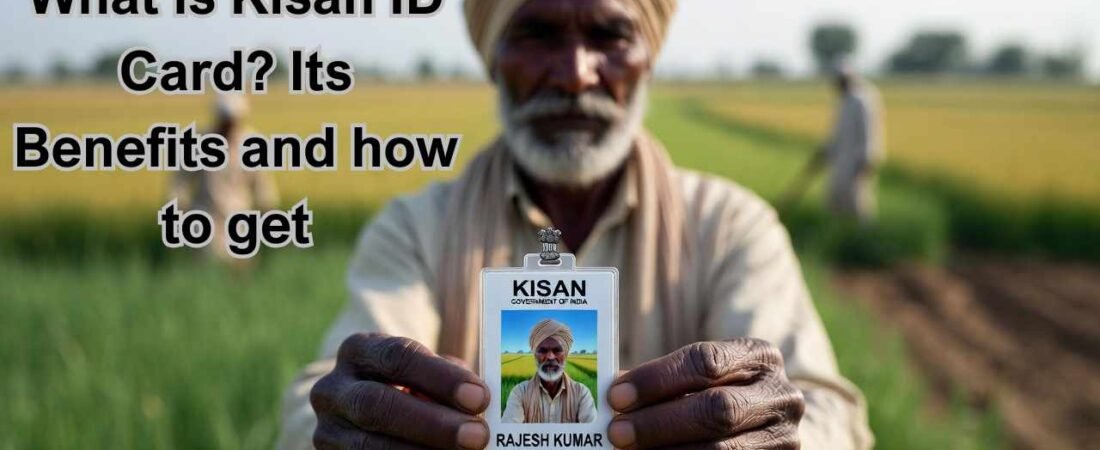


What is Kisan ID Card?
The Kisan ID Card is an official identity document introduced under the Pradhan Mantri Kisan Samman Nidhi (PM-KISAN) Yojana, a flagship scheme of the Government of India. It is designed to provide farmers with a unique identification that links them directly to government welfare programs. The card acts as proof of eligibility for financial assistance, subsidies, and other agricultural benefits. Farmers registered under PM-KISAN receive annual financial support of ₹6,000, distributed in three equal installments of ₹2,000 each, directly into their bank accounts.
Beyond financial aid, the Kisan ID Card serves as a digital identity for farmers, ensuring transparency and efficiency in the distribution of benefits. It helps reduce dependency on middlemen, minimizes corruption, and guarantees that assistance reaches the rightful beneficiaries. In essence, the card is not just an identity document but a gateway to empowerment, enabling farmers to access multiple schemes and services seamlessly.
Benefits of Kisan ID Card
The Kisan ID Card offers a wide range of benefits that strengthen farmers’ livelihoods and promote agricultural growth. Some of the key advantages include:
- Direct financial support: Eligible farmers receive ₹6,000 annually, credited directly to their bank accounts in three installments.
- Transparency in transactions: Payments are made through Direct Benefit Transfer (DBT), eliminating corruption and ensuring funds reach farmers without delay.
- Access to subsidies: Farmers can avail themselves of subsidies on seeds, fertilizers, and equipment, reducing input costs.
- Eligibility for loans: The card strengthens farmers’ credibility, making it easier to secure agricultural loans from banks and cooperatives.
- Insurance coverage: Holders are eligible for crop insurance schemes, protecting them against losses due to natural calamities.
- Integration with other schemes: The card links farmers to multiple government initiatives, including pension schemes and rural development programs.
- Digital identity: It provides farmers with a recognized digital identity, simplifying verification processes for various services.
These benefits collectively aim to reduce rural-urban income disparity, improve economic resilience, and encourage sustainable farming practices.
The Kisan ID Card is not just a financial support mechanism but a holistic empowerment tool for farmers, offering a wide spectrum of benefits that extend far beyond the immediate monetary assistance. By ensuring direct benefit transfers of ₹6,000 annually, the card provides a reliable safety net that helps farmers manage seasonal uncertainties and stabilize household income. This financial aid, though modest, often becomes the difference between debt and dignity for small and marginal farmers. Moreover, the card opens doors to subsidies on seeds, fertilizers, and modern equipment, which significantly reduce input costs and encourage the adoption of sustainable farming practices. Access to institutional credit is another critical advantage, as the card strengthens farmers’ credibility with banks and cooperatives, enabling them to secure loans at lower interest rates compared to informal moneylenders. Insurance coverage linked to the card further shields farmers from the devastating impact of crop failures due to droughts, floods, or pest attacks, ensuring that their livelihoods are not entirely dependent on unpredictable weather patterns. Beyond financial and risk management, the Kisan ID Card integrates farmers into the digital ecosystem, giving them a recognized identity that simplifies verification processes and connects them to multiple government schemes, including pensions and rural development programs. This digital inclusion reduces bureaucratic hurdles, minimizes corruption, and ensures transparency in transactions, thereby fostering trust between farmers and the government. The card also plays a vital role in policy-making, as the data collected from registered farmers helps authorities design targeted interventions, allocate resources efficiently, and respond swiftly to crises. Socially, the card contributes to reducing rural-urban inequality by uplifting farming communities, discouraging distress migration, and promoting balanced regional development. It empowers farmers to invest in better technologies, diversify crops, and adopt eco-friendly practices, aligning with national goals of food security and environmental sustainability. In essence, the Kisan ID Card is more than a welfare initiative—it is a catalyst for transformation, bridging the gap between traditional agriculture and modern governance. It embodies the vision of inclusive growth, ensuring that every farmer, regardless of landholding size or location, has access to opportunities, protection, and recognition. By combining financial support, technological access, and social security, the Kisan ID Card stands as a cornerstone of India’s agricultural reforms, promising a future where farmers are not just beneficiaries but active contributors to the nation’s prosperity.
How to Get a Kisan ID Card
Obtaining a Kisan ID Card is a straightforward process, but it requires farmers to meet certain eligibility criteria and complete necessary documentation. The steps include:
- Eligibility check: Farmers must be small or marginal landholders, owning cultivable land as per government records.
- Registration: Farmers can register through the official PM-KISAN portal (pmkisan.gov.in), Common Service Centers (CSCs), or local revenue offices.
- Document submission: Required documents include Aadhaar card, land ownership papers, and bank account details.
- e-KYC completion: Farmers must complete the Know Your Customer (KYC) process online or at CSCs to verify their identity.
- Approval and issuance: Once verified, the farmer’s details are approved, and the Kisan ID Card is issued.
- Status tracking: Beneficiaries can check the status of their application and installments on the PM-KISAN website.
This process ensures that only genuine farmers benefit from the scheme, while digital verification prevents duplication and fraud.
Conclusion
The Kisan ID Card is more than just a piece of plastic—it is a symbol of empowerment for millions of farmers across India. By providing direct financial support, ensuring transparency, and linking farmers to multiple welfare schemes, the card plays a crucial role in strengthening the agricultural sector. It reduces dependency on informal credit sources, protects farmers against risks, and promotes sustainable farming practices.
For a country where agriculture remains the backbone of the economy, initiatives like the Kisan ID Card are vital. They not only improve farmers’ financial stability but also contribute to national food security and rural development. As India continues to modernize its agricultural policies, the Kisan ID Card stands as a cornerstone of inclusive growth, ensuring that every farmer has the tools and support needed to thrive in a changing world.
The Kisan ID Card represents a transformative step in India’s agricultural landscape. It is not merely an identification tool but a bridge between farmers and the government, ensuring that welfare schemes reach the grassroots without delay or distortion. By offering direct financial support, subsidies, and access to credit, the card strengthens the backbone of the rural economy. It reduces dependency on informal moneylenders, who often exploit farmers with high interest rates, and instead opens up avenues for institutional credit and insurance coverage. This shift is crucial in empowering farmers to make informed decisions, invest in modern farming techniques, and safeguard themselves against risks such as crop failure or market fluctuations.
Another significant aspect of the Kisan ID Card is its role in promoting digital inclusion. In a country where millions of farmers live in remote areas, the card provides them with a recognized digital identity. This identity not only simplifies verification processes but also integrates farmers into the broader digital ecosystem. As India moves toward e-governance and digital transactions, the Kisan ID Card ensures that farmers are not left behind. It allows them to access schemes, track payments, and verify their eligibility online, thereby reducing bureaucratic hurdles and enhancing transparency.
The card also plays a pivotal role in policy-making and data collection. With millions of farmers registered under the PM-KISAN scheme, the government gains access to reliable data on landholding patterns, crop choices, and regional agricultural practices. This data can be used to design targeted policies, allocate resources efficiently, and respond quickly to crises such as droughts or floods. For instance, during natural calamities, authorities can identify affected farmers and disburse relief funds directly through the Kisan ID system. Such responsiveness strengthens trust between farmers and the government, fostering a sense of security and belonging.
From a socio-economic perspective, the Kisan ID Card contributes to reducing inequality. Agriculture remains the primary source of livelihood for nearly half of India’s population, yet farmers often face financial instability and lack of recognition. By institutionalizing support through the card, the government acknowledges the critical role of farmers in ensuring food security. The financial assistance, though modest, provides a safety net that can be life-changing for small and marginal farmers. It helps them meet household expenses, invest in better seeds, or simply reduce the stress of uncertain incomes. Over time, this support can uplift rural communities, reduce migration to cities, and promote balanced regional development.
Moreover, the Kisan ID Card encourages sustainable farming practices. With access to subsidies and loans, farmers are more likely to adopt modern technologies such as drip irrigation, organic fertilizers, and mechanized equipment. These practices not only increase productivity but also conserve resources, aligning with India’s broader goals of environmental sustainability. The card thus becomes a catalyst for modernization, enabling farmers to transition from traditional methods to more efficient and eco-friendly approaches.
Reference Sources: imp.news National Government Services Portal ClearTax