

Introduction : Social Media Influencers
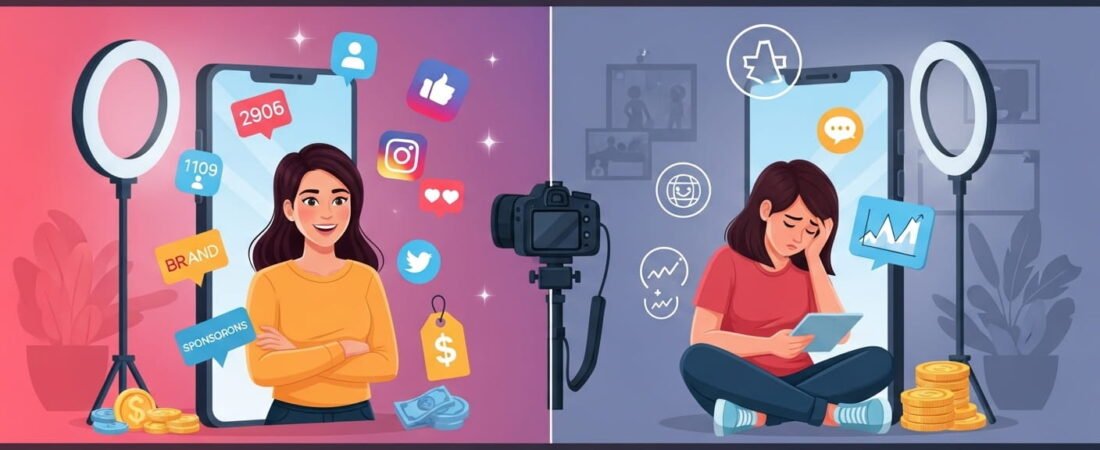
In today’s digital-first world, social media influencers have become modern-day celebrities. They shape opinions, drive trends, influence purchasing decisions, and often appear to live glamorous lifestyles filled with brand collaborations, luxury trips, and viral fame. However, behind every perfectly curated post lies a deeper reality that is rarely discussed.
How Platforms Turned Ordinary People into Digital Celebrities
Over the last decade, platforms like Instagram, YouTube, and TikTok have transformed ordinary individuals into global personalities. Unlike traditional celebrities who rise through film or television, influencers build audiences through content — whether it is fashion, fitness, technology, education, gaming, or lifestyle. As a result, influence today is no longer limited to mainstream media; it is decentralized, digital, and algorithm-driven.
Influencer Marketing as a Billion-Dollar Industry
Moreover, the influencer industry has evolved into a billion-dollar ecosystem. Brands are increasingly shifting marketing budgets from traditional advertisements to influencer marketing because consumers trust relatable creators more than corporate messaging. Consequently, influencers are not just content creators; they are personal brands, entrepreneurs, and digital marketers.
The Hidden Reality Behind Fame and Financial Success
However, while fame and financial success stories dominate headlines, the reality is far more complex. The influencer journey often includes inconsistent income, algorithm dependency, burnout, public criticism, and intense competition. Therefore, understanding the influencer industry requires more than admiring viral success — it demands analyzing both opportunity and risk.
Why Influencing Attracts the Younger Generation
Interestingly, many young people today view influencing as a primary career aspiration. The appeal is understandable: flexible work schedules, creative freedom, global reach, and financial independence. Yet, very few discussions highlight the strategic planning, branding, analytics, and resilience required to sustain influence long-term.
Influencers as Digital Entrepreneurs: A Professional Perspective
From my perspective as a digital marketing professional, I see influencer marketing not as a shortcut to fame, but as a sophisticated business model built on trust, consistency, and audience engagement. In fact, successful influencers operate much like startups — managing content strategy, audience research, partnerships, and performance metrics.
Fame, Money, and Reality: What This Article Explores
In this article, I will explore the three key dimensions of the influencer world: fame, money, and reality. We will analyze how influencers build visibility, how they monetize their platforms, and what challenges lie beneath the polished surface.
Because beyond the filters and hashtags, there is a real story that deserves to be understood.
1. The Rise of Social Media Fame: From Ordinary to Influential
First of all, social media has democratized fame. Unlike traditional media industries that required gatekeepers, today anyone with a smartphone and internet access can build an audience. Platforms like Instagram and TikTok use algorithms that amplify engaging content, regardless of the creator’s background.
As a result, micro-influencers and niche creators have emerged as powerful voices in specific communities. For instance, a tech reviewer, skincare expert, or finance educator can attract thousands — even millions — of followers by delivering value-driven content.
However, fame on social media is often rapid and unpredictable. A single viral video can bring overnight recognition. Yet, sustaining that attention requires consistent strategy, creativity, and adaptability. Therefore, viral success alone does not guarantee long-term influence.
Moreover, public visibility comes with scrutiny. Influencers frequently face online criticism, comparison pressure, and the constant need to remain relevant. Consequently, mental resilience becomes as important as content quality.
In short, social media fame is accessible — but maintaining it requires discipline and strategic effort.
2. The Money Factor: How Influencers Actually Earn
One of the most common questions is: how do influencers make money?
Primarily, influencers earn through brand collaborations, sponsored posts, affiliate marketing, ad revenue, and digital product sales. For example, creators on YouTube can monetize through advertisements, while Instagram influencers often partner with fashion, beauty, or tech brands.
Moreover, influencer marketing has become a preferred strategy for businesses because it offers targeted audience access. Brands trust influencers to communicate authentically, which increases conversion rates compared to traditional ads.
However, influencer income is not always stable. Payments depend on engagement rates, follower demographics, niche authority, and negotiation skills. Additionally, algorithms constantly change, impacting reach and revenue.
Interestingly, many successful influencers diversify income streams by launching courses, merchandise, subscription communities, or consulting services. Therefore, long-term financial stability often depends on business diversification rather than sponsorships alone.
Ultimately, influencer income can be lucrative — but it requires entrepreneurial thinking and strategic financial management.
3. The Hidden Reality: Pressure, Burnout & Algorithm Dependency
While social media presents polished lifestyles, the behind-the-scenes reality often includes long hours of content planning, editing, analytics tracking, and brand communication.
Furthermore, influencers depend heavily on platform algorithms. A minor update in visibility rules can significantly reduce reach. Consequently, income and engagement may fluctuate unpredictably.
Additionally, the pressure to constantly produce content can lead to burnout. Creativity under continuous demand becomes exhausting. Many influencers report mental fatigue due to comparison culture and public expectations.
On the other hand, authenticity has become increasingly important. Audiences today quickly recognize forced promotions or inauthentic messaging. Therefore, influencers must balance monetization with trust preservation.
In essence, influencer life combines creative freedom with business responsibility and emotional resilience.
4. Influencer Marketing: A Structured Business Model
From a digital marketing standpoint, influencer marketing is data-driven and performance-based. Brands analyze engagement metrics, audience demographics, and ROI before investing.
Moreover, micro-influencers often deliver higher engagement rates compared to celebrity influencers. Therefore, influence is not merely about follower count — it is about community trust.
Interestingly, influencer campaigns now include measurable KPIs such as clicks, conversions, impressions, and brand recall. As a result, the influencer ecosystem operates much like a digital advertising industry.
Thus, behind every “casual” post lies strategic planning and analytics.
5. Is Influencing a Sustainable Career?
Finally, the most important question: is influencing sustainable long-term?
The answer depends on adaptability. Social media trends change rapidly. Platforms evolve. Audience preferences shift. Therefore, influencers who continuously learn, innovate, and diversify remain relevant.
Additionally, many influencers transition into entrepreneurship, launching brands or agencies. Others build careers in content strategy, digital marketing, or media production.
In conclusion, influencing is not merely about fame; it is about building digital assets and audience relationships.
Conclusion
When we examine the world of social media influencers, it becomes clear that fame, money, and reality coexist in complex ways. On one hand, digital platforms have democratized opportunity, allowing individuals to build brands from their bedrooms. On the other hand, this opportunity comes with volatility, competition, and pressure.
Moreover, while influencer income can be substantial, it is rarely effortless. Behind every sponsored post lies negotiation, analytics, and brand alignment. Therefore, influencer marketing is not a shortcut to success — it is a strategic business model requiring consistency and credibility.
At the same time, the psychological aspect cannot be ignored. Constant visibility, audience expectations, and algorithm changes create stress that traditional careers may not. Consequently, mental well-being and digital boundaries become essential.
However, despite these challenges, influencing represents a powerful shift in how media operates. It reflects a move from corporate-controlled messaging to creator-driven storytelling. And in many ways, this shift empowers individuals to shape narratives and communities.
From a career perspective, the key lesson is adaptability. Whether one chooses to become an influencer or collaborate with them, understanding digital ecosystems is critical in today’s economy.
Ultimately, social media influencers symbolize both the opportunity and complexity of the digital age. The glamour may attract attention, but the strategy sustains success.
And perhaps, the real influence lies not in followers — but in trust.
Disclaimer:
This article is for informational purposes only and does not provide financial or career advice. Income and career outcomes in influencer marketing vary based on individual effort, niche, and market conditions.
Read More https://readnews.in/top-10-technologies-that-will-define-the-future/